How to Get mina perhonen’s “Shopper” and “Bird Charm” — Conditions and Types Explained
Textiles in Adorable Forms: An Encyclopedia of minä perhonen “Animal Cushions”
media
Did you know that minä perhonen offers a variety of cushions that quietly blend into the atmosphere of a room, gently accompanying your space and interior?
And yet, for those of us who love minä perhonen, they are never just “interior pieces.”
There was a time when, no matter how often we visited the stores or refreshed the online shop, all we would see was the word “sold out.”
Not only the rabbit cushions, but each and every one felt impossibly out of reach—leaving many of us with that quiet ache of wanting, yet never quite being able to find them.
But those once distant, almost unattainable pieces have now become irreplaceable companions, softly woven into our everyday lives.
In this article, I’d like to introduce these beloved cushions—each one carefully cherished by those who share the same admiration—like turning the pages of a small encyclopedia.
I hope you’ll enjoy this lively little parade, where the longing of those days meets the quiet joy of now.
So, shall we begin?
Contents
- 【usagi cushion】
An iconic rabbit-shaped cushion by minä perhonen. - 【kousagi cushion】
A smaller rabbit-shaped cushion by minä perhonen. - 【onomekaman】
A mysterious, long-limbed character with a name that seems to hide a secret. - 【konomekaman】
A smaller, endearing version of the long-limbed character. - 【quzyla cushion】
A magnificent whale-shaped cushion crafted with extraordinary detail. - 🖋 Tips for Welcoming It into Your Everyday Life
【usagi cushion】
An iconic rabbit-shaped cushion by minä perhonen.
One of the signature icons of minä perhonen.
It is typically crafted by combining different textiles for the face and the body.
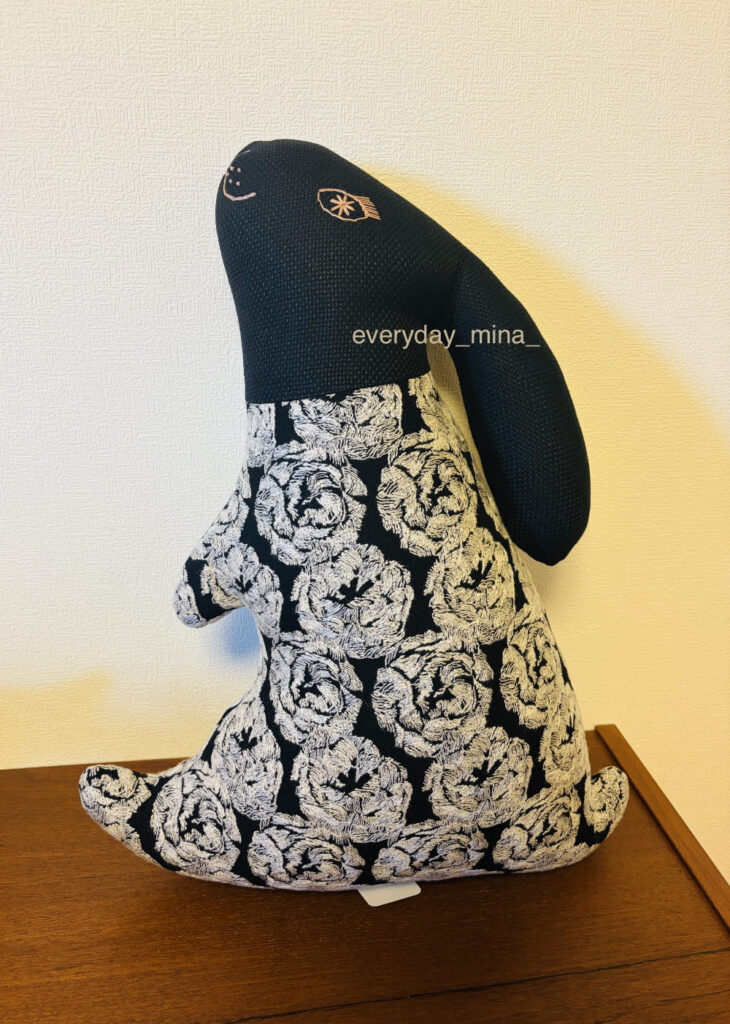
Some versions have been crafted entirely from a single textile, offering a more luxurious feel, while others—such as limited editions—feature charming details like small adornments around the neck.

(Size: approx. H49 × W40 × D18 cm)
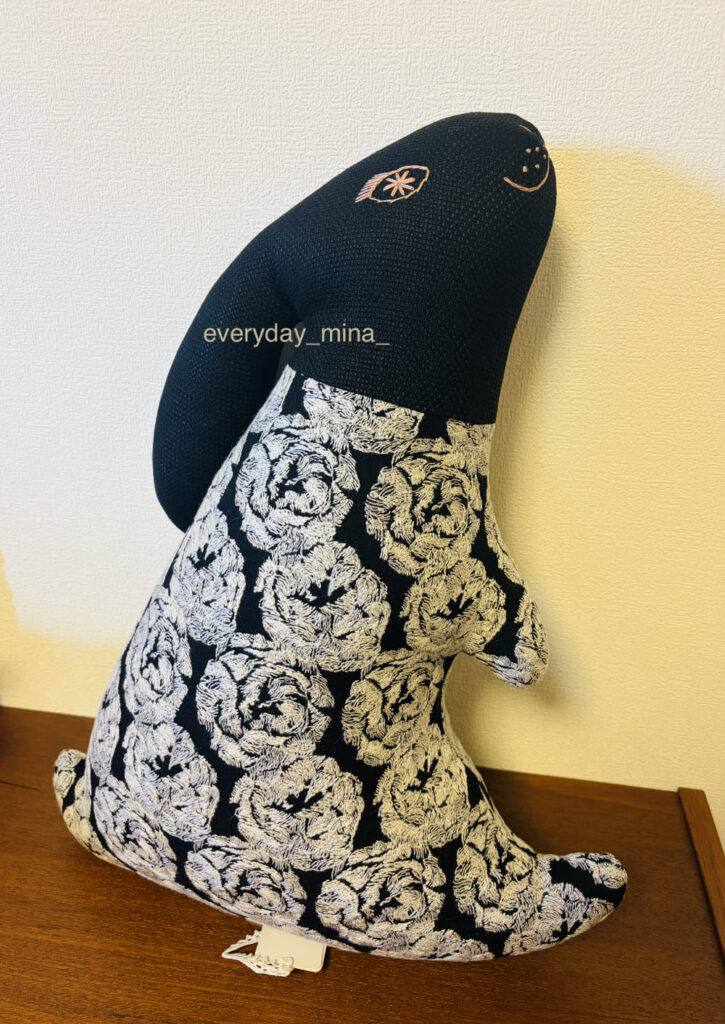
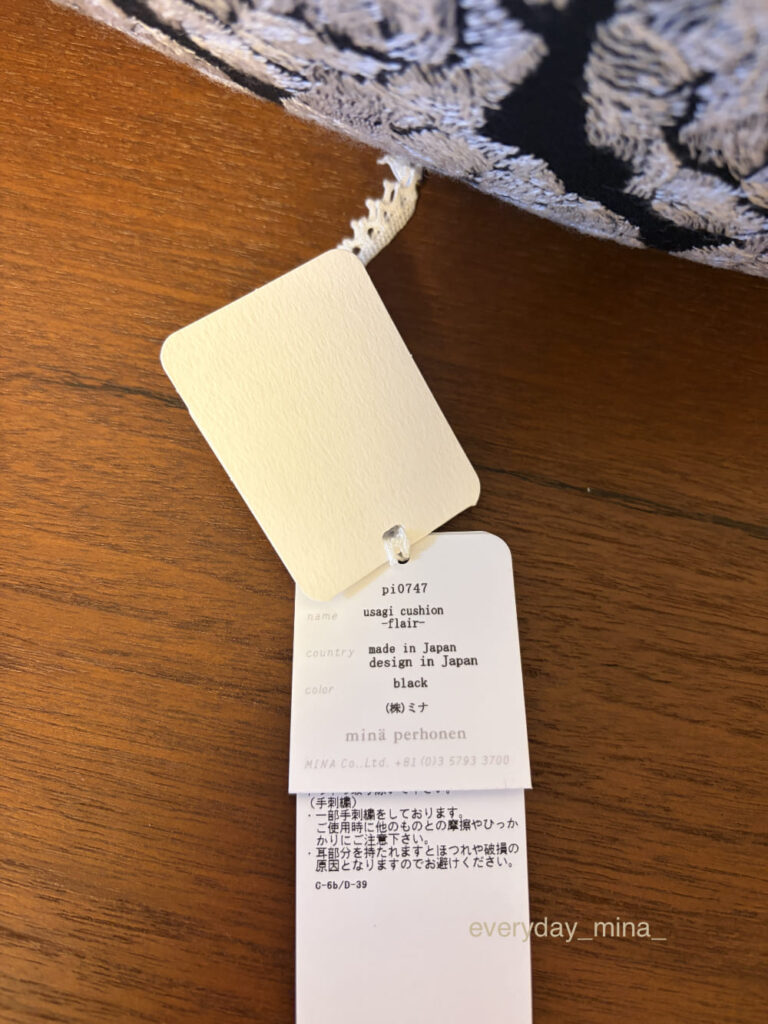

Among the staff as well, the usagi cushion turned out to be the most commonly owned.
The ways of finding one varied—online, in stores, or as a thoughtful gift from someone special.
While some mentioned choosing it to match the atmosphere of their room,
by far the most common answer was simply “intuition” (which made us smile).
“That moment when you feel, ‘Ah… our eyes met. I have to take this one home.’”
It seems everyone treasures that quiet spark of intuition.

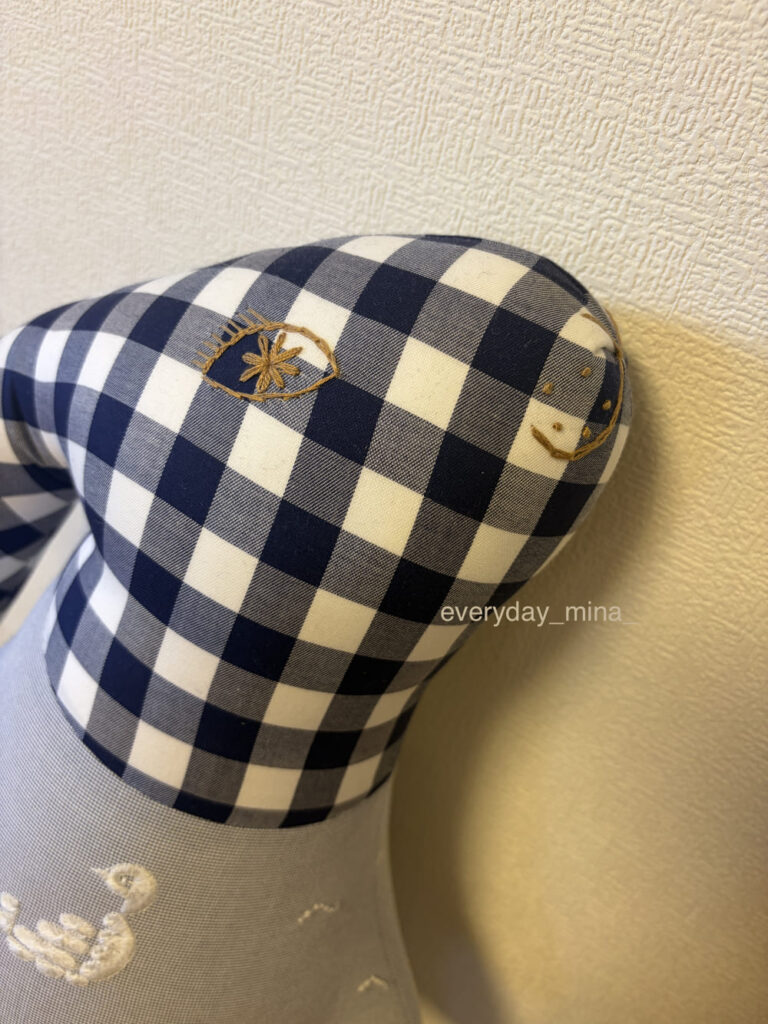
This is a usagi cushion where the textile is also used for the face, adding a special charm to its expression.
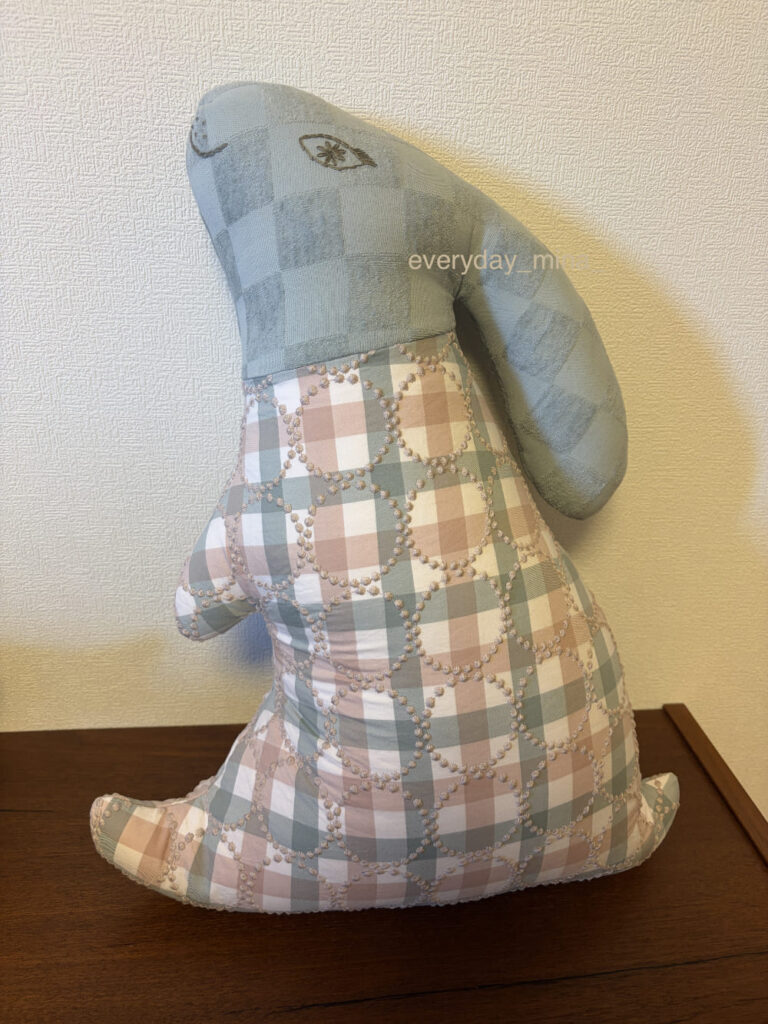
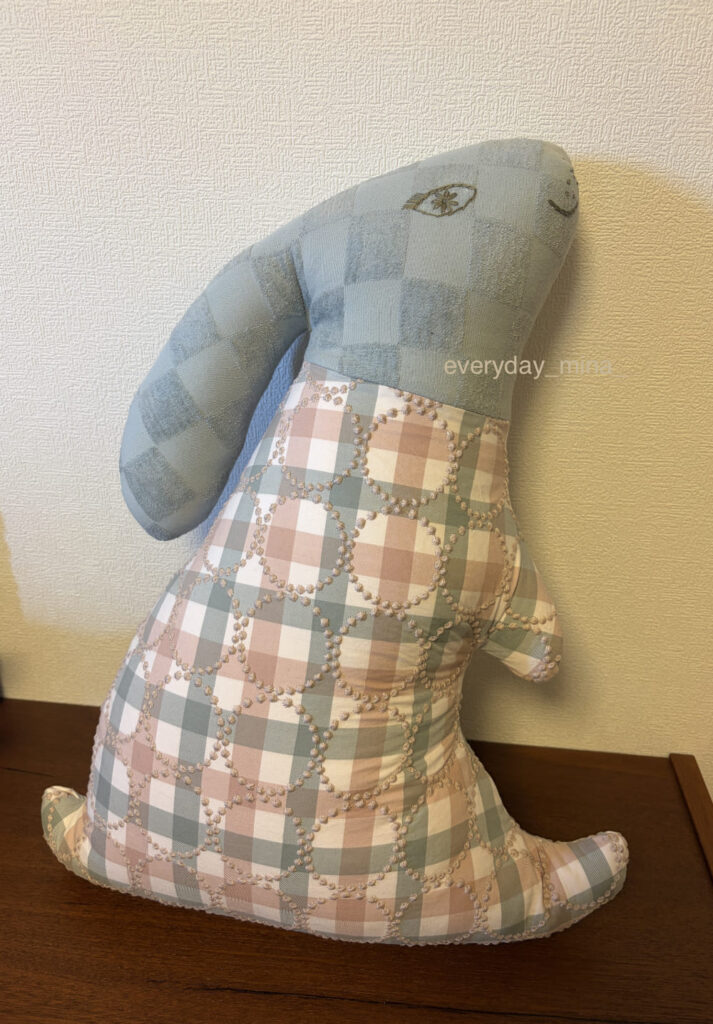
Personally, the one that has been quietly drawing my attention lately is this gingham-check usagi cushion.
The fresh blue gingham is paired with the light blue lake bird textile, creating a soft and refreshing impression.
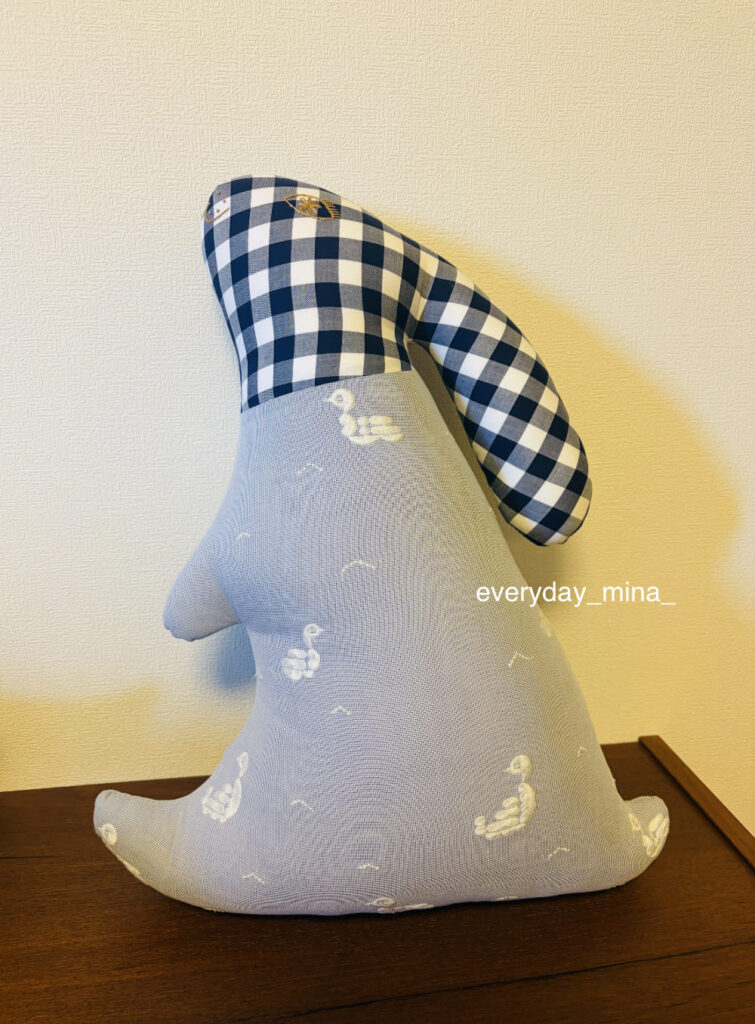
Strangely enough, it’s only as I’ve grown older that I’ve come to truly love the simple yet charming clarity of gingham.
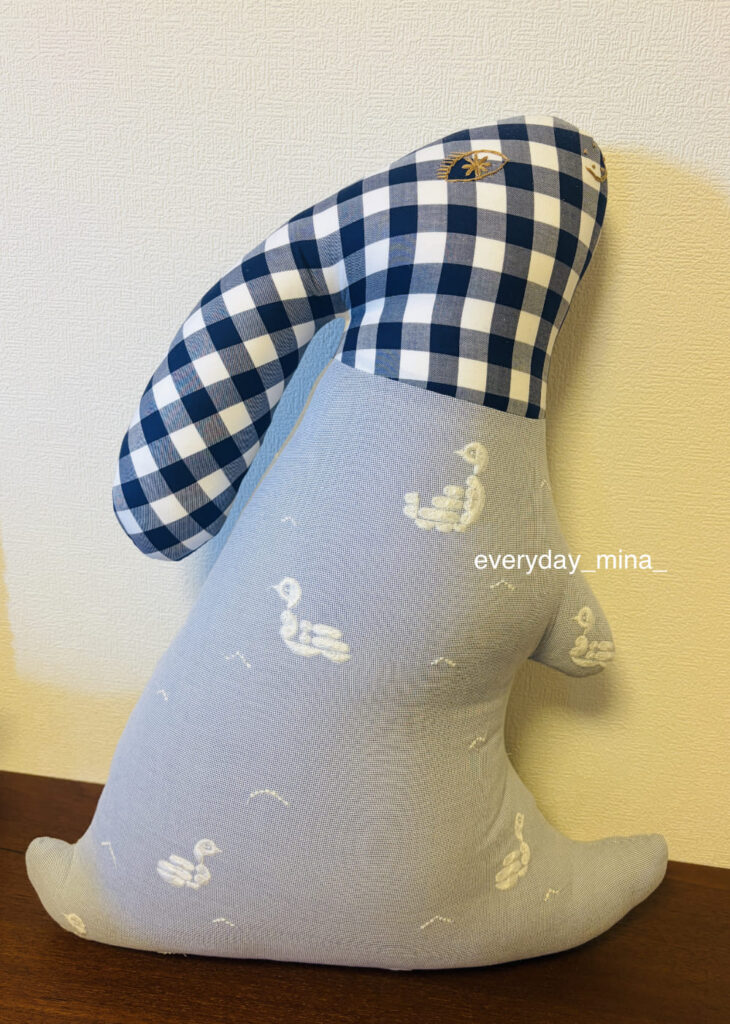
Different from how I once saw it in my younger days,
it now feels like an “eternal standard” — a kind of beauty I can only truly appreciate as I am today.

Not overly sweet, yet carrying a gentle sense of nostalgia,
this gingham-clad usagi quietly blends into everyday scenes, while still bringing a certain, unmistakable sense of delight.

This may come as a surprise to some, but even if you live far away, it is sometimes possible to purchase by phone, as long as the item is available in-store.
When I made my purchase, it seems there were two usagi cushions in the exact same textile.
The staff kindly explained, “One has a more slender, refined expression, while the other feels softer, with a gentler face.”
Even before holding it in my hands, I found myself deeply moved by such thoughtful and caring service.
The one I’m about to introduce is a rather rare and special piece among the many usagi cushions.

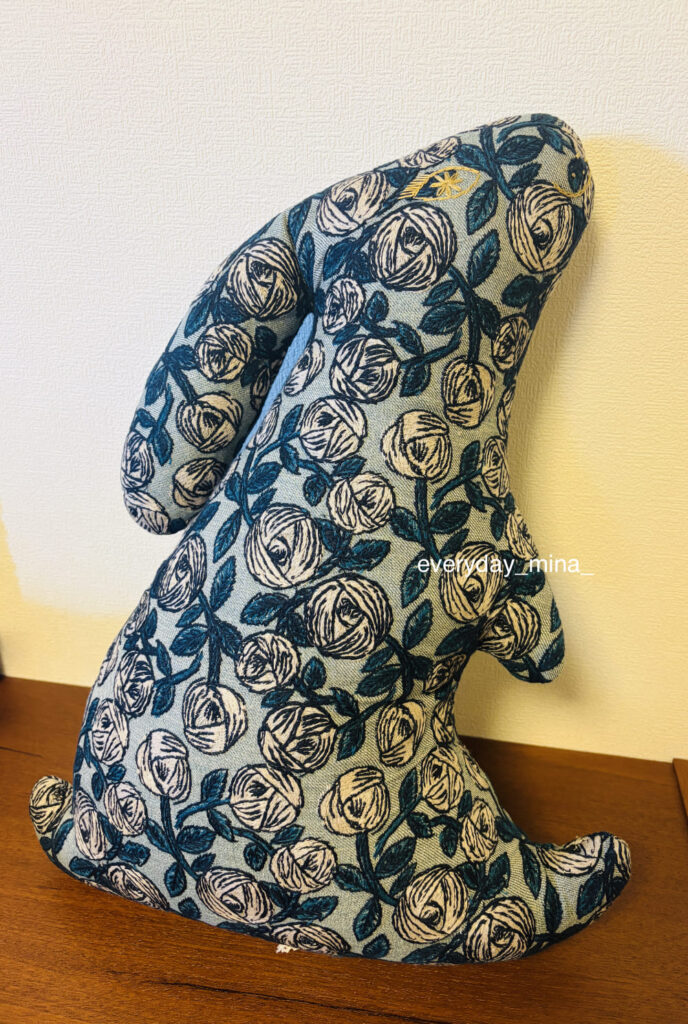
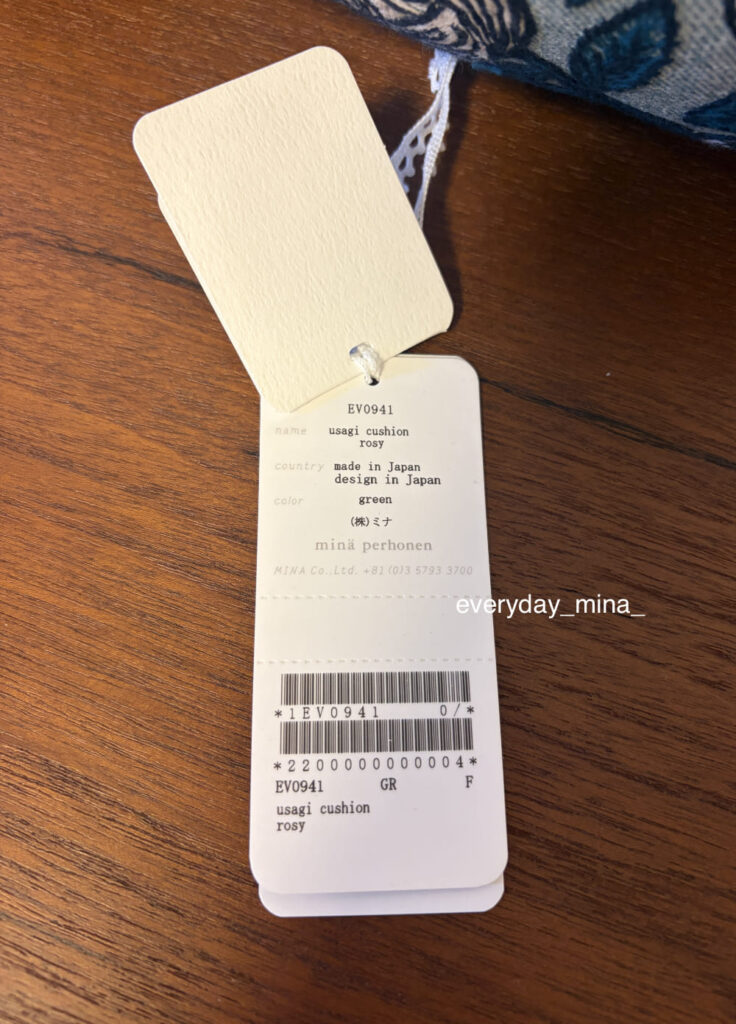
It was created as part of a made-to-order event held in the past, where various items were crafted using one of minä perhonen’s signature textiles, rosy.
This cushion was born as one of those pieces.

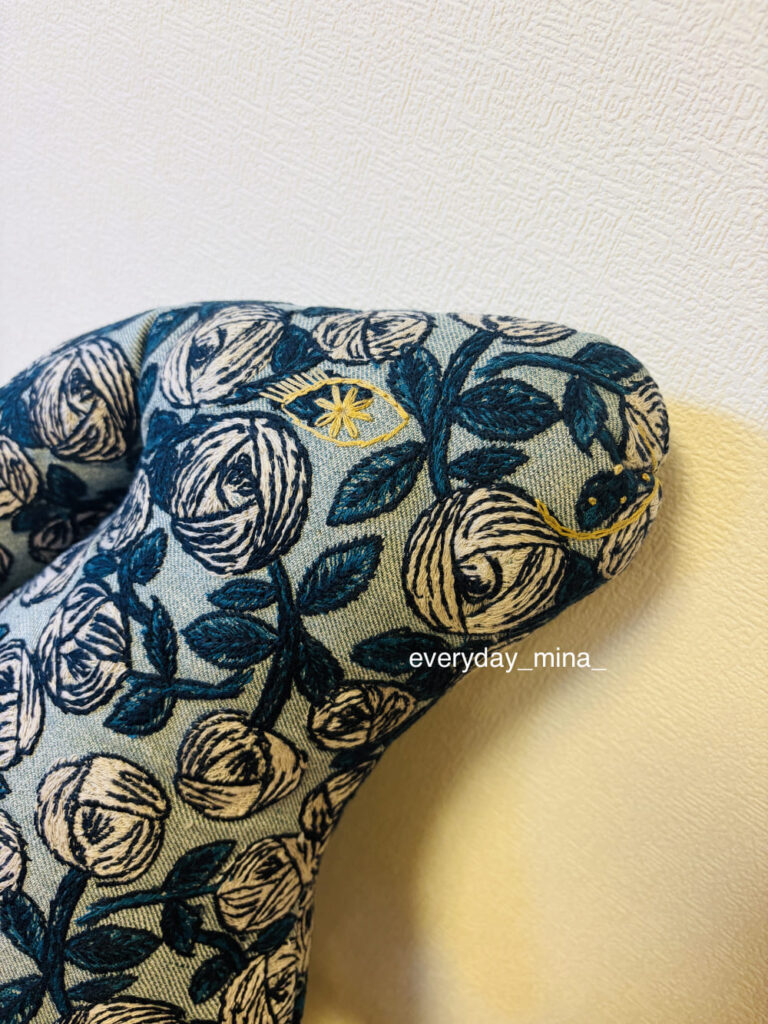
The rose embroidery spread across its surface gently overlaps with the soft curves of the usagi form…
There is something quietly luxurious about its presence—an unmistakable charm that feels unique to a limited event piece.
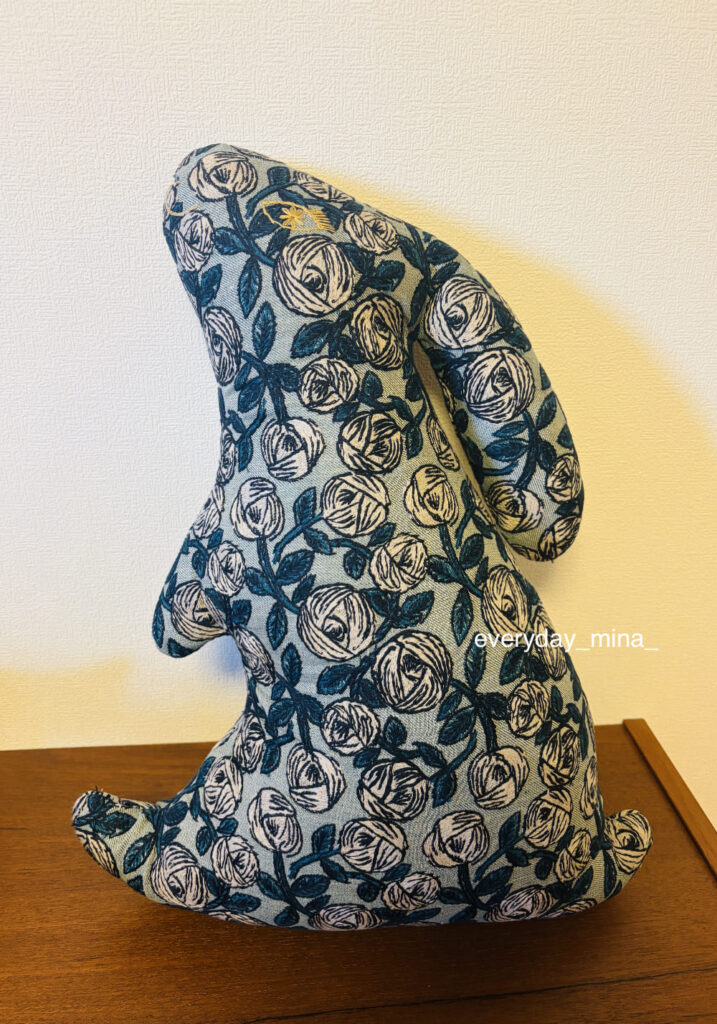
The body line appears a little more slender than the typical usagi cushion.
At the same time, it feels generously filled, with a pleasantly plump form.
Having only ever seen rosy used in garments,
this thicker, more durable version—almost as if made especially for cushions—feels wonderfully fresh.
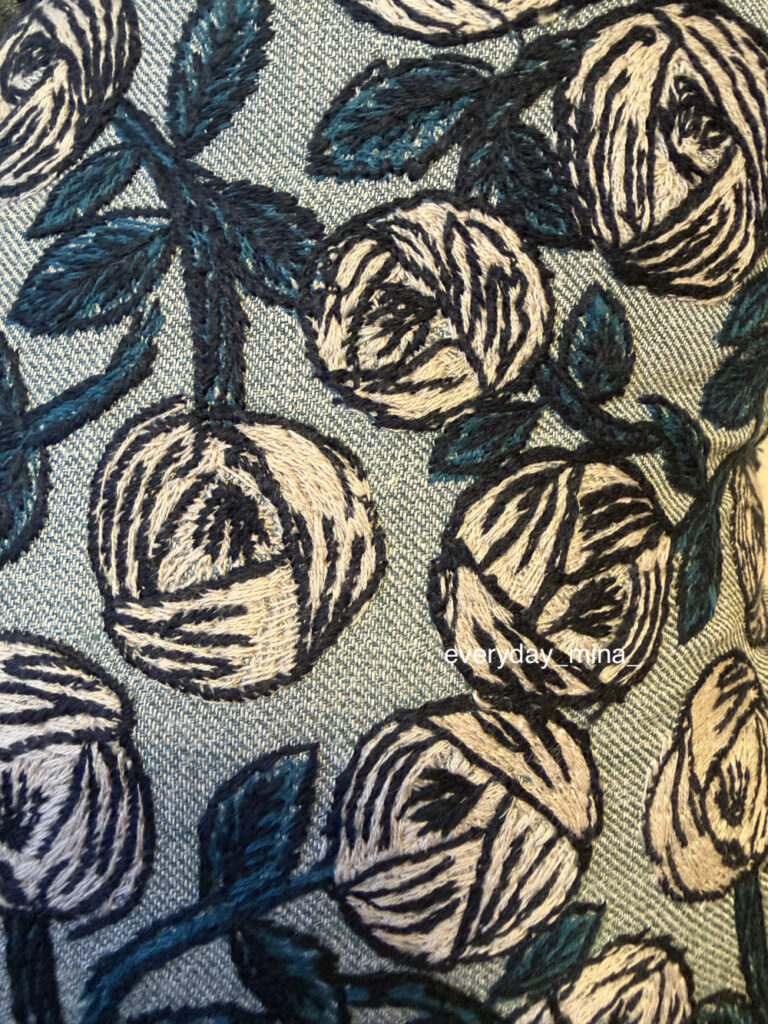
A quietly elegant beauty
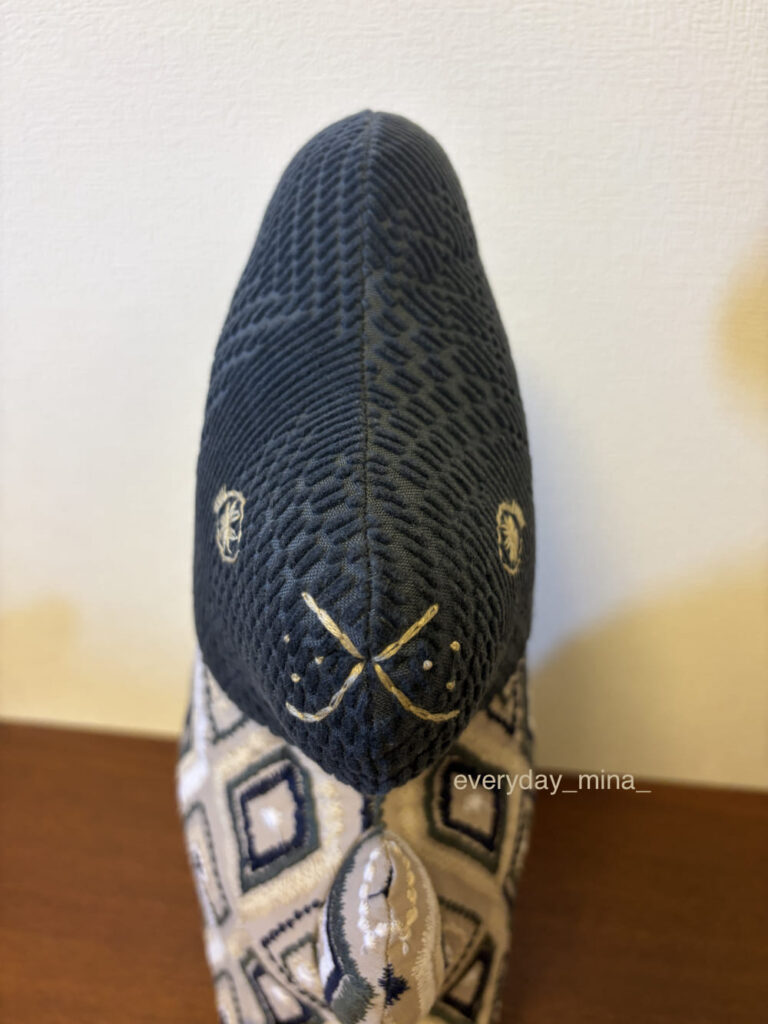
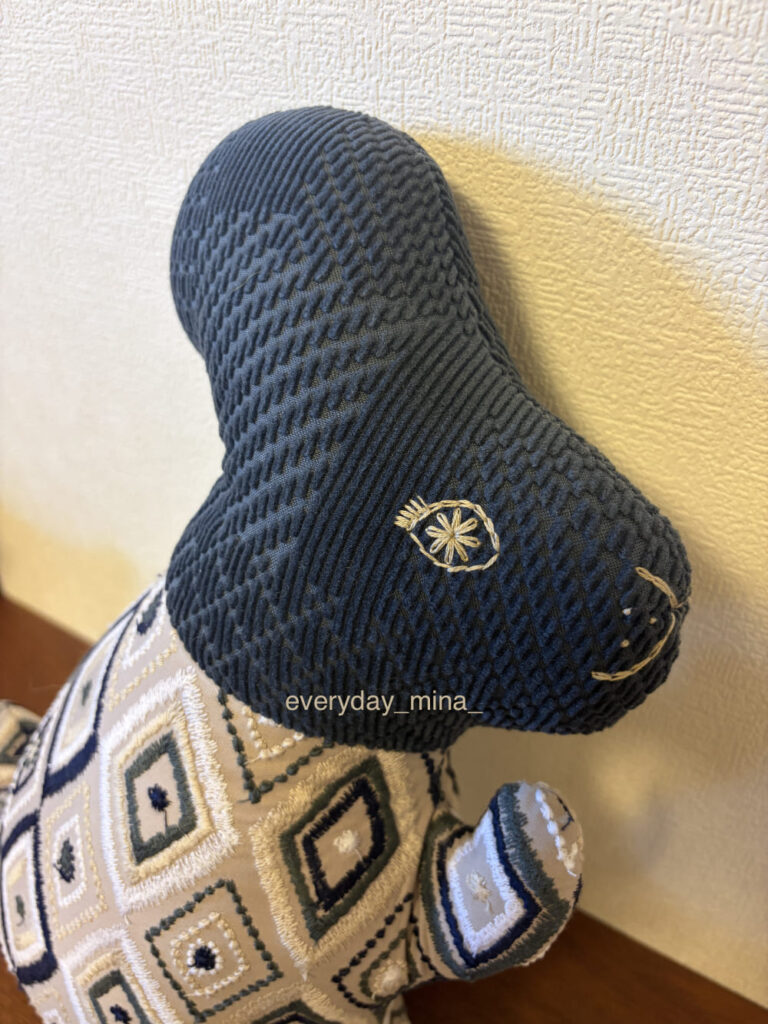
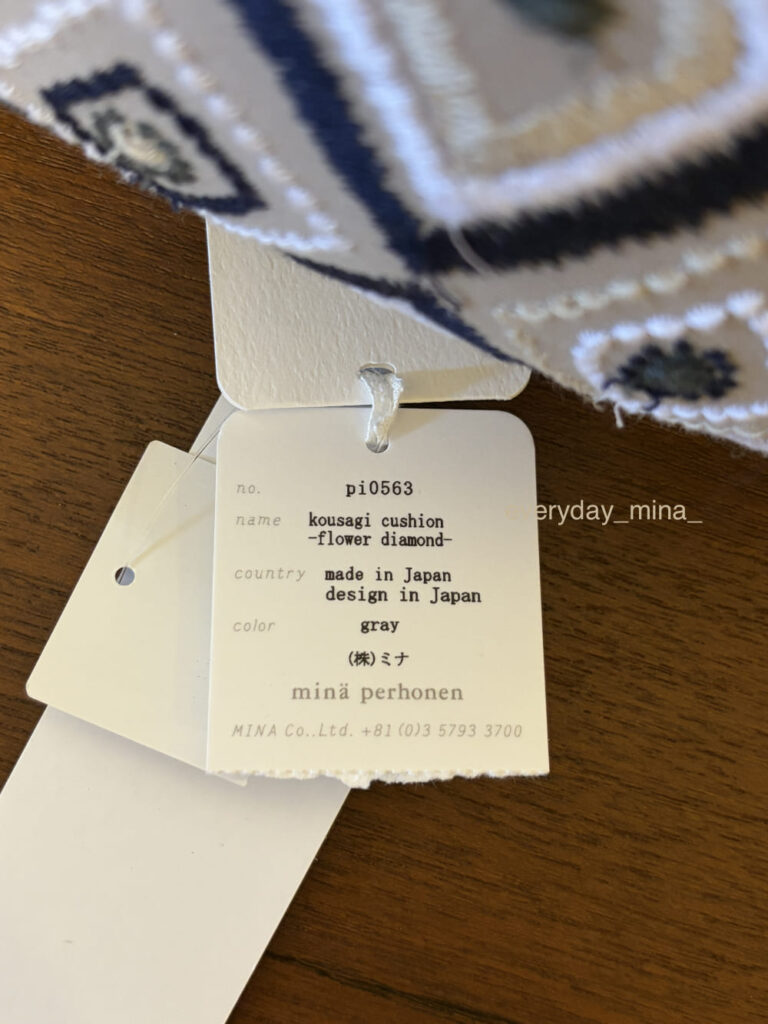
【kousagi cushion】
A smaller rabbit-shaped cushion by minä perhonen.
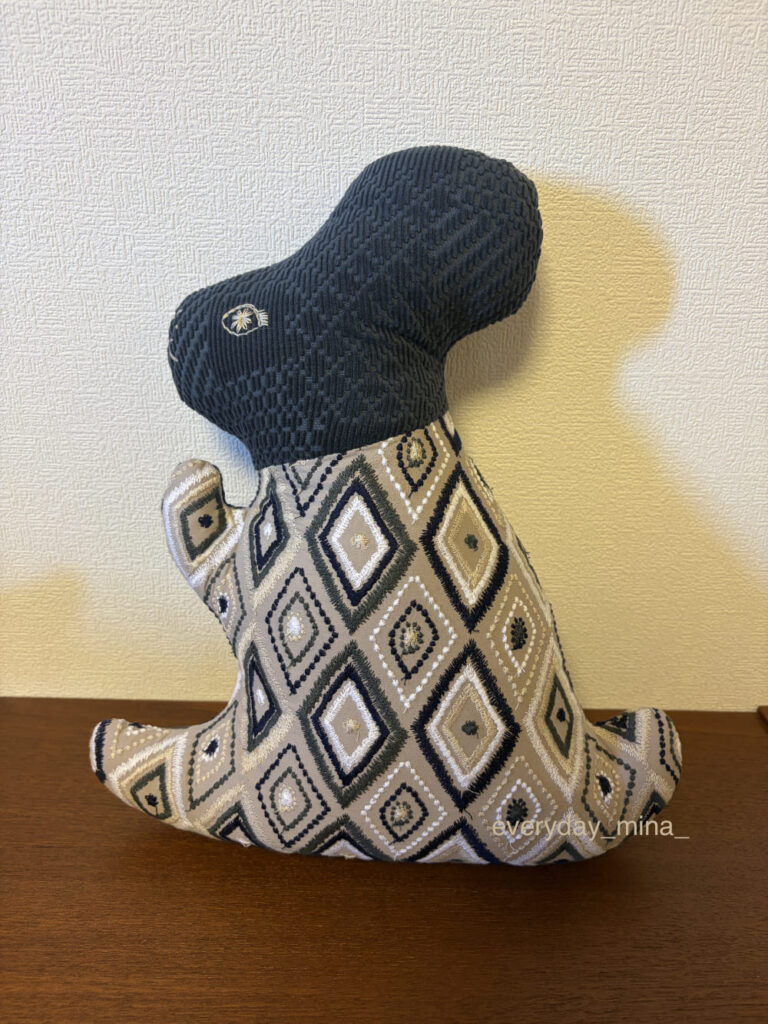
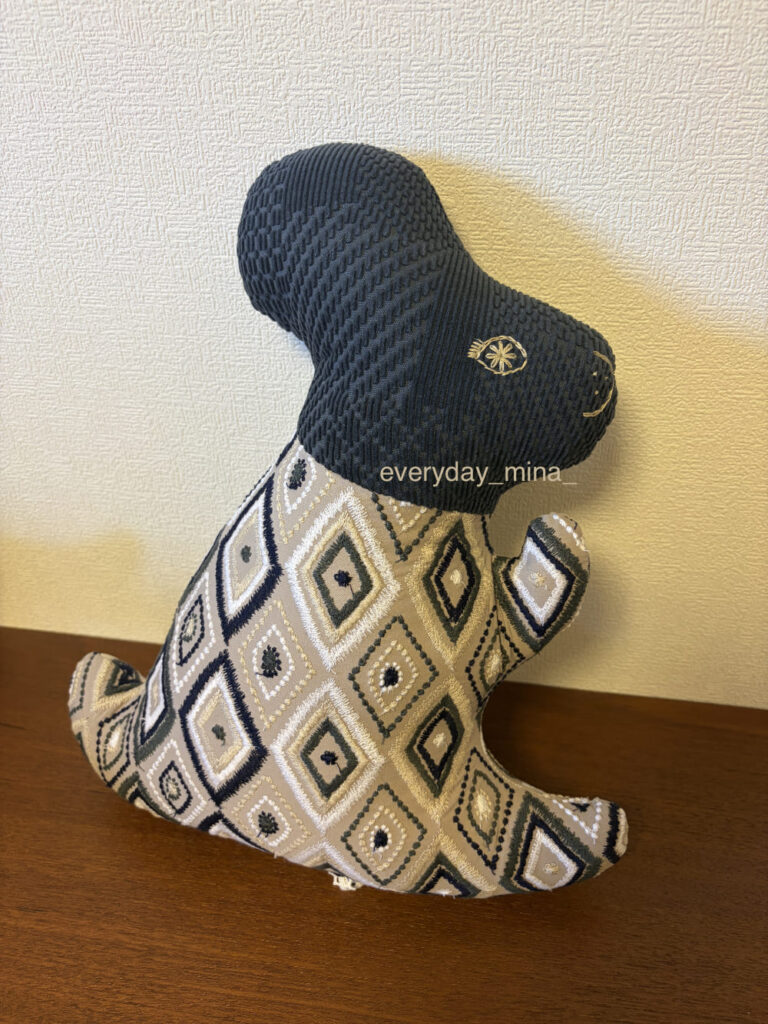
Introduced as a smaller counterpart to the 【usagi cushion】, this is the 【kousagi cushion】.
Though the only difference is its size, it somehow carries a completely different kind of charm…
a quiet, endearing presence that makes you want to keep it close at all times.
(Size: approx. H36 × W30 × D11 cm)
Curious to see the difference more clearly,
I decided to compare their proportions through actual measurements.
📏 Usagi vs. Kousagi: A Study in Proportions
For clarity, I compared their proportions using height as a reference value of 1.
| Item | Usagi Height (approx. 49 cm) | Kousagi Height (approx. 36 cm) | Key Differences |
| Width | 0.81 | 0.83 | Kousagi is slightly wider. |
| Depth | 0.36 | 0.30 | Usagi is slightly thicker. |
🔍 Findings: Here’s What’s Different
As each piece is handmade, slight variations may occur; the following observations reflect general tendencies.
- “Kousagi” — a softly rounded, almost baby-like silhouette?
With a slightly higher width-to-height ratio, the kousagi appears a bit wider for its height,perhaps emphasizing its gently rounded, childlike form. - “Usagi” — designed with a sense of comforting fullness?
The usagi has a slightly higher thickness ratio.With a depth that corresponds to its 49 cm height, it may be designed to offer a comforting sense of fullness when held.

The more I look into them, the more attached I find myself becoming.
Among fellow minä friends, there are even those who have paired the same textile as “parent” and “child,” side by side.
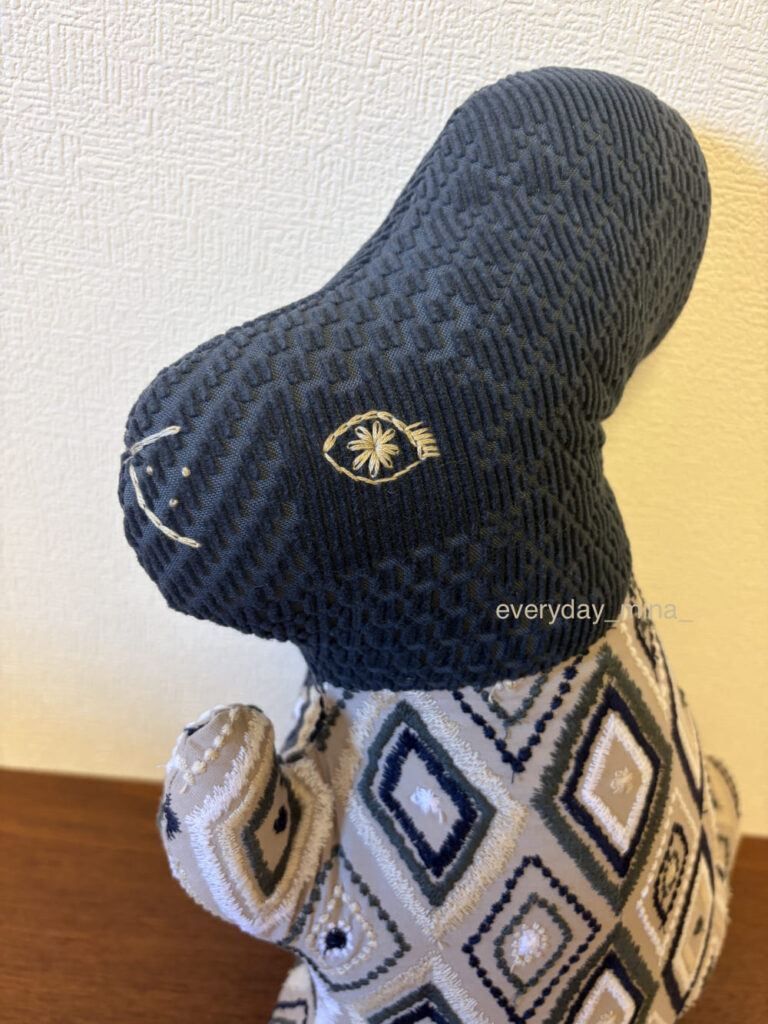
Perhaps because each piece is handmade, every face is truly unique.
If you happen to encounter one in-store, I hope you’ll take a moment to look closely at its expression.
【onomekaman】
A mysterious, long-limbed character with a name that seems to hide a secret.
“The onomekaman from the other day…”

This curious-sounding word is casually exchanged among fellow minä friends, as if it were something entirely ordinary.

The first time I heard it, I couldn’t help but ask again—
“Wait… what language is that?”

I was completely puzzled, trying to make sense of it (and quietly laughing to myself).

As it turns out, the name comes from a charming bit of wordplay—something quite unique to Akira Minagawa.

“Namakemono” (sloth)
↓
n a m a k e m o n o
(read backwards…)
↓
o n o m e k a m a n
→ onomekaman!

Once you know the origin, you can’t help but smile and think, “Ah… that makes perfect sense.”

A sloth, moving at its own gentle pace,
given a name that carries the sound of something like a guardian spirit from a distant land.

The more you learn about them,
the more endearing they become.
Among the staff as well, second only to the usagi cushion, the one with an overwhelmingly devoted following is the “onomekaman.”
To be honest, my first impression was something like, “It’s… a little unusual, isn’t it?”
Perhaps it falls into that curious category of being slightly odd, yet somehow endearing.
And yet, that gentle looseness, the long limbs, and that quietly expressive face…
Once you begin to notice its charm, something curious happens—you may find them slowly multiplying in your space (which still makes me smile).
There is something lovely about seeing one sitting quietly in the corner of a room.
But as more of them gather, that slightly surreal yet tender world begins to take shape.
Before you know it, you too may find yourself under the quiet spell of onomekaman.
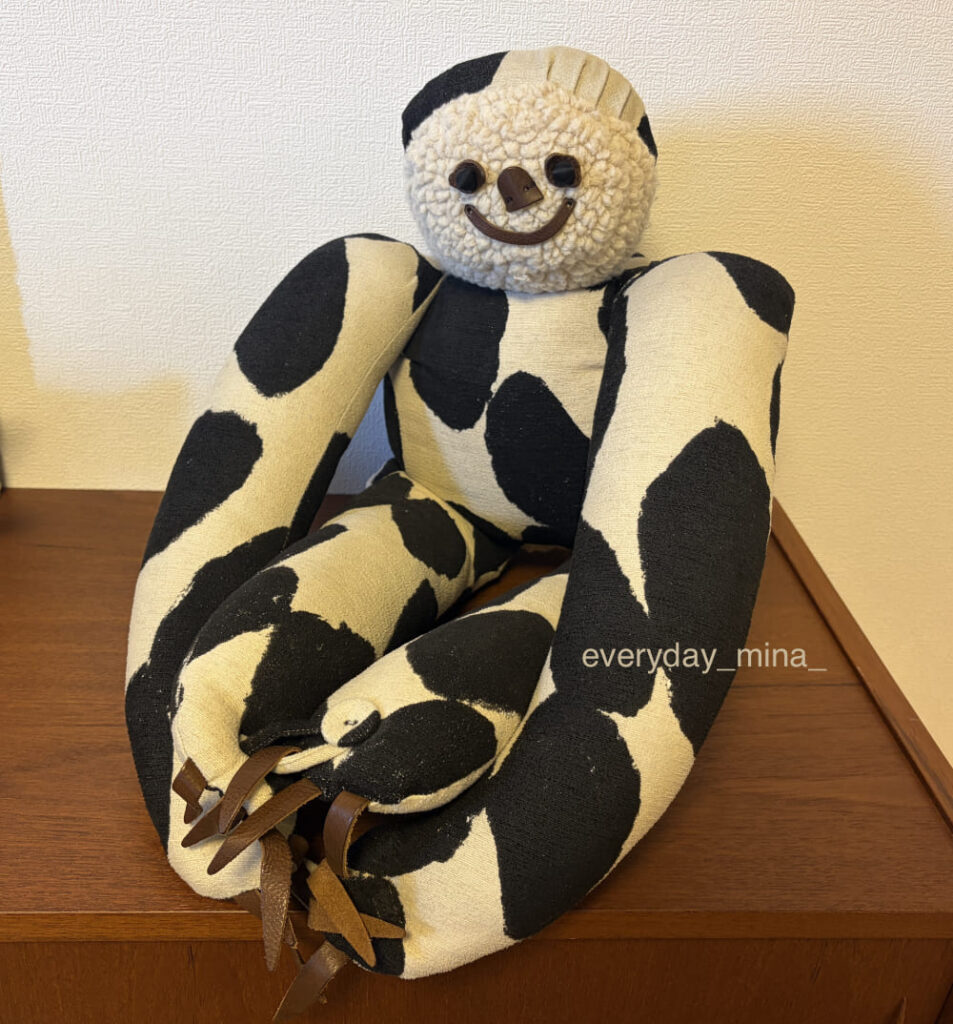
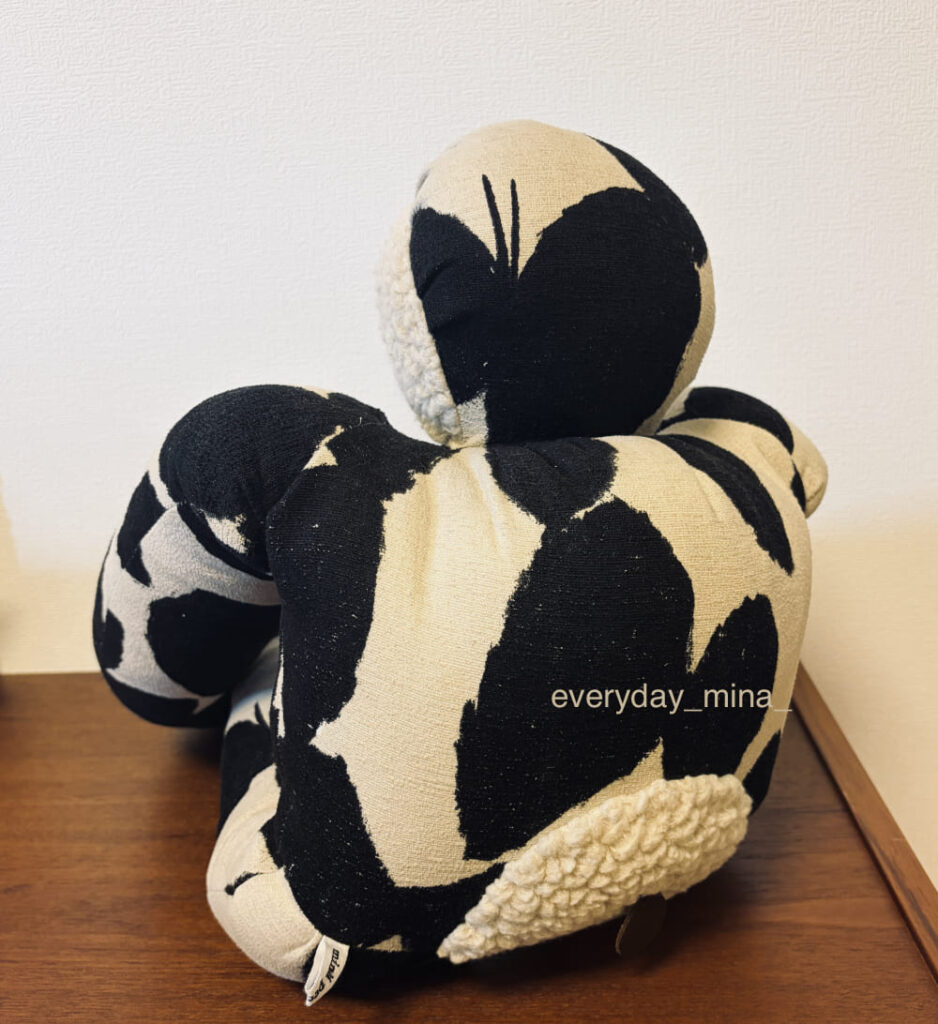
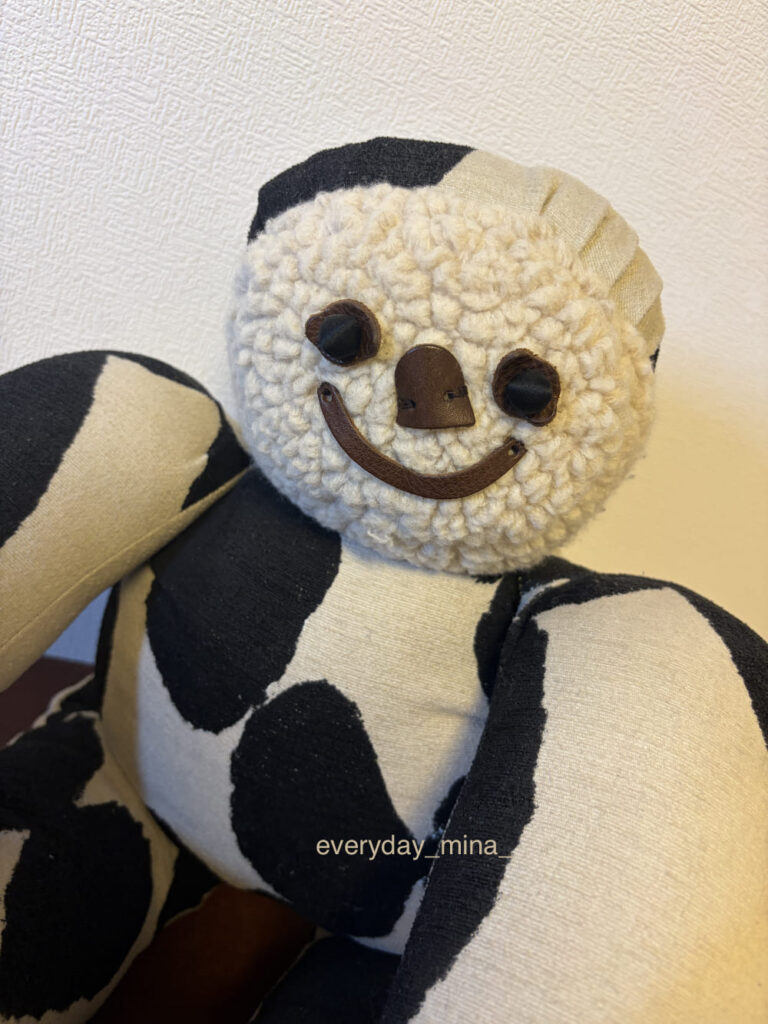
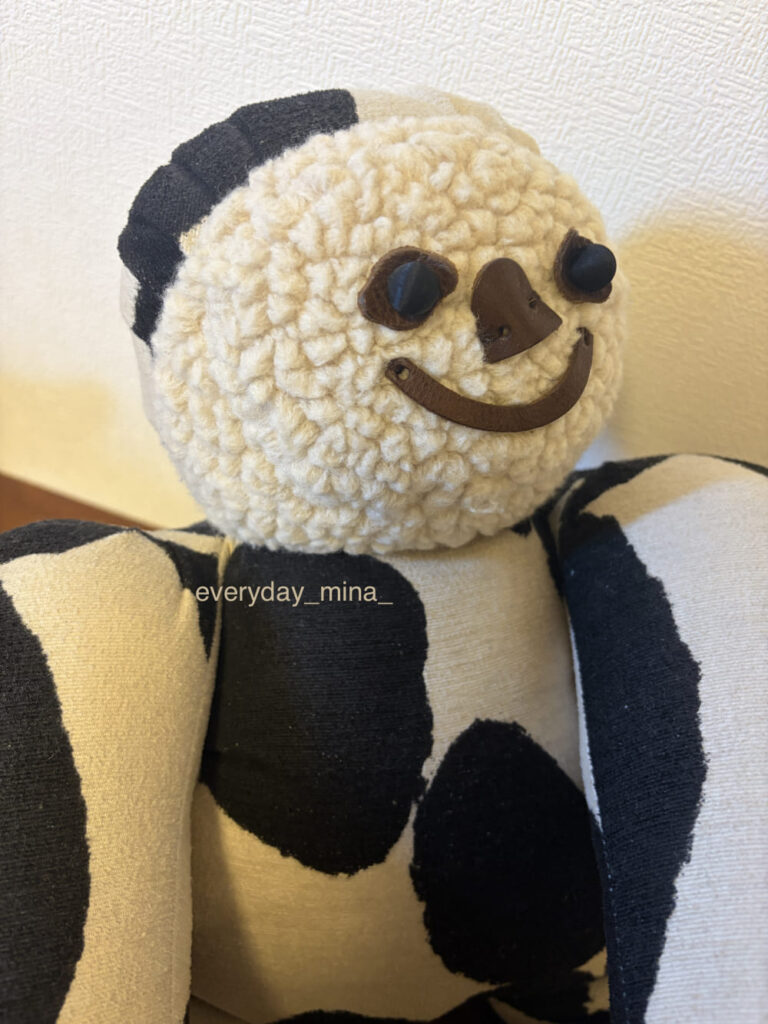
Size (onomekaman)
(Sizes may vary slightly; the following are approximate averages.)
Length: approx. 93 cm
Width: approx. 32 cm
Seated height: approx. 34 cm
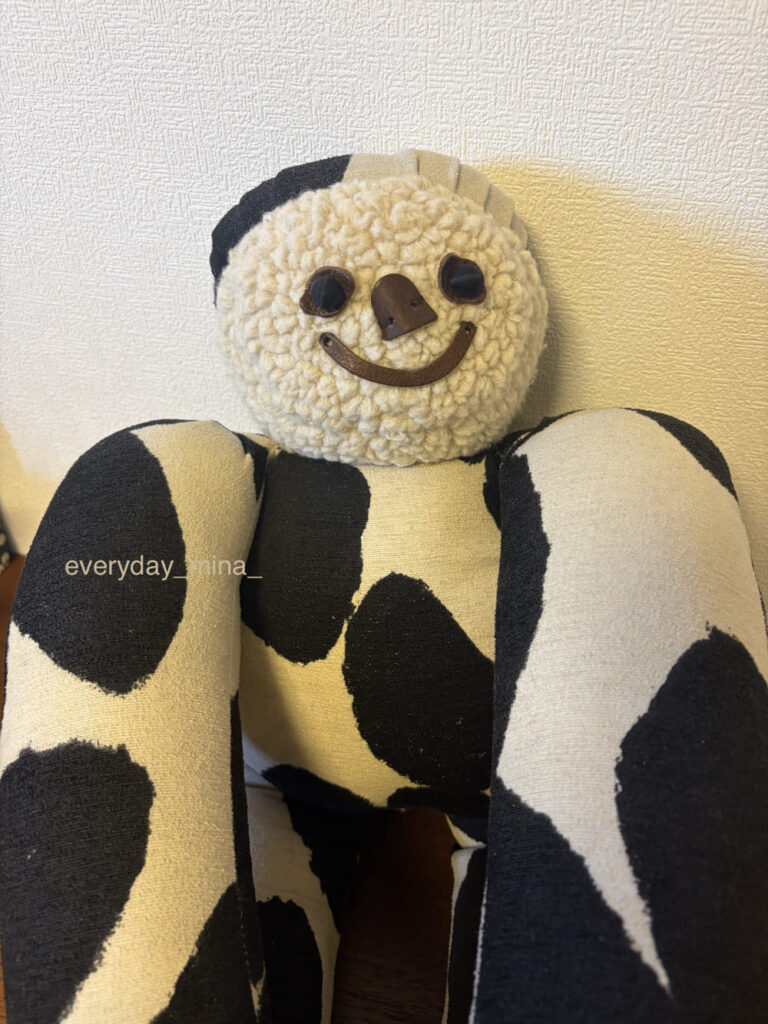
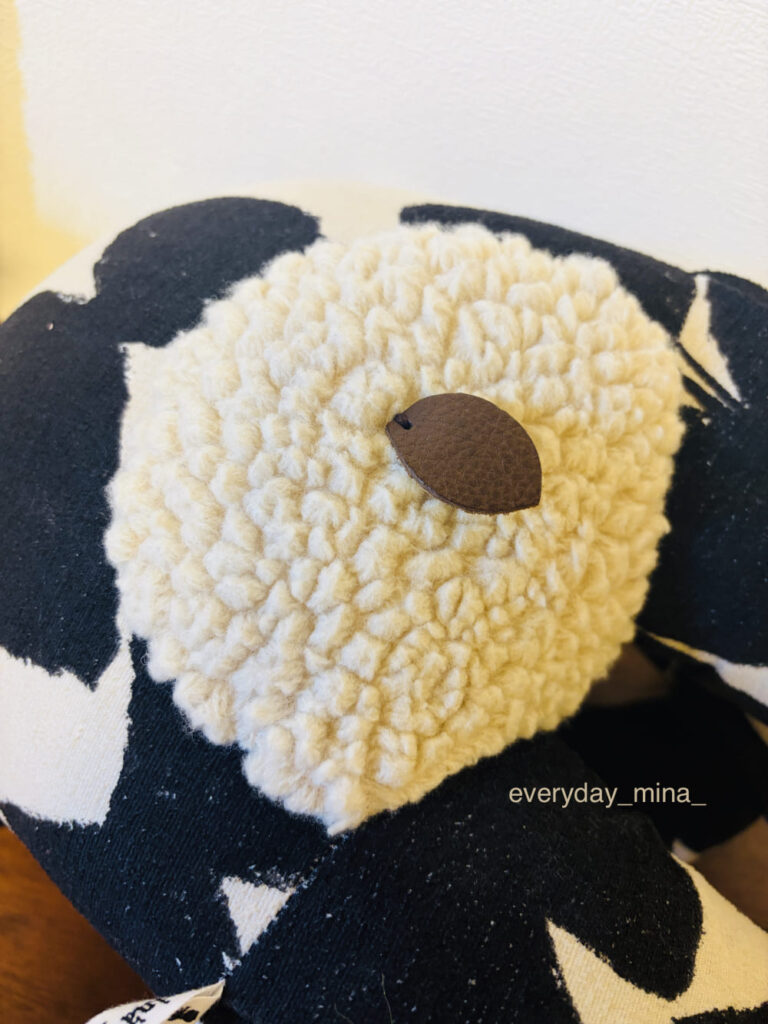
It feels as if it gently says, “It’s all okay,”
and there’s something about that expression that brings a quiet sense of comfort.
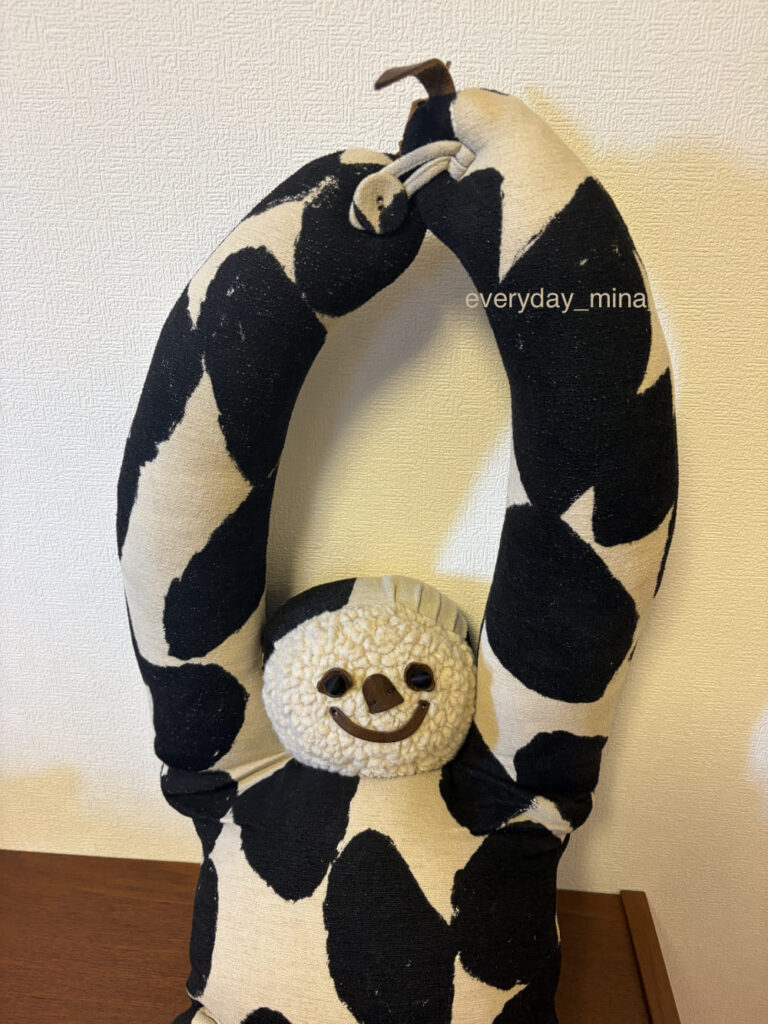
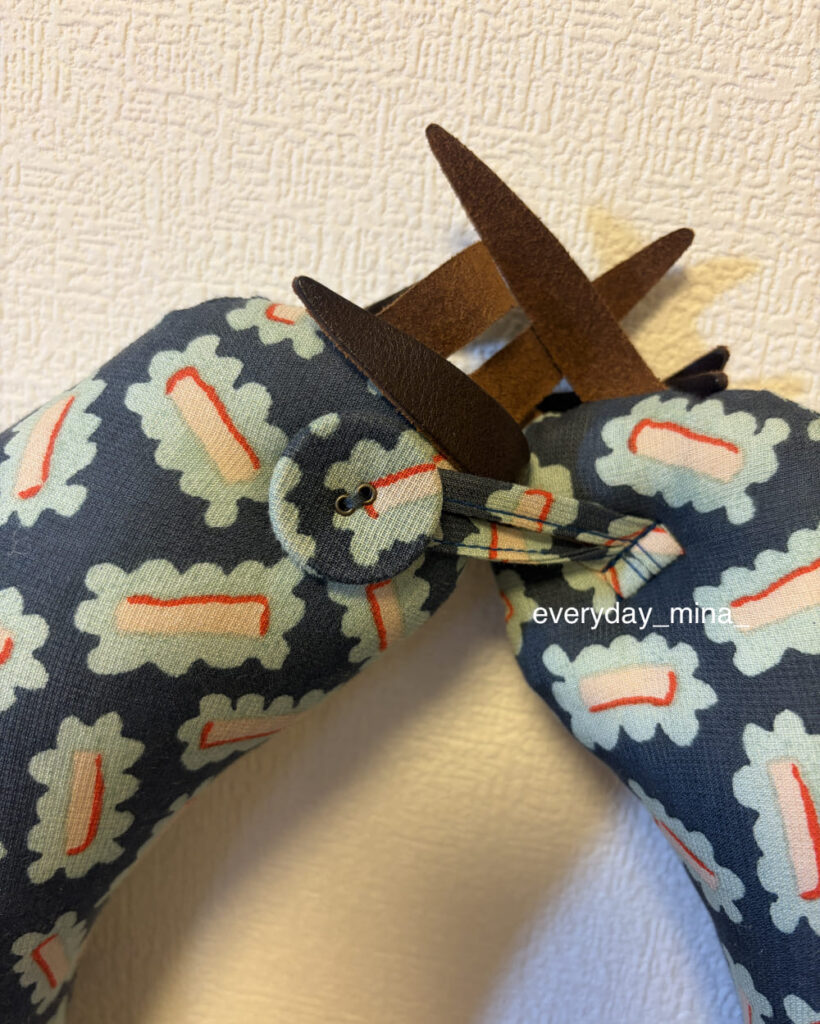
The face and limbs are crafted with remarkable delicacy.
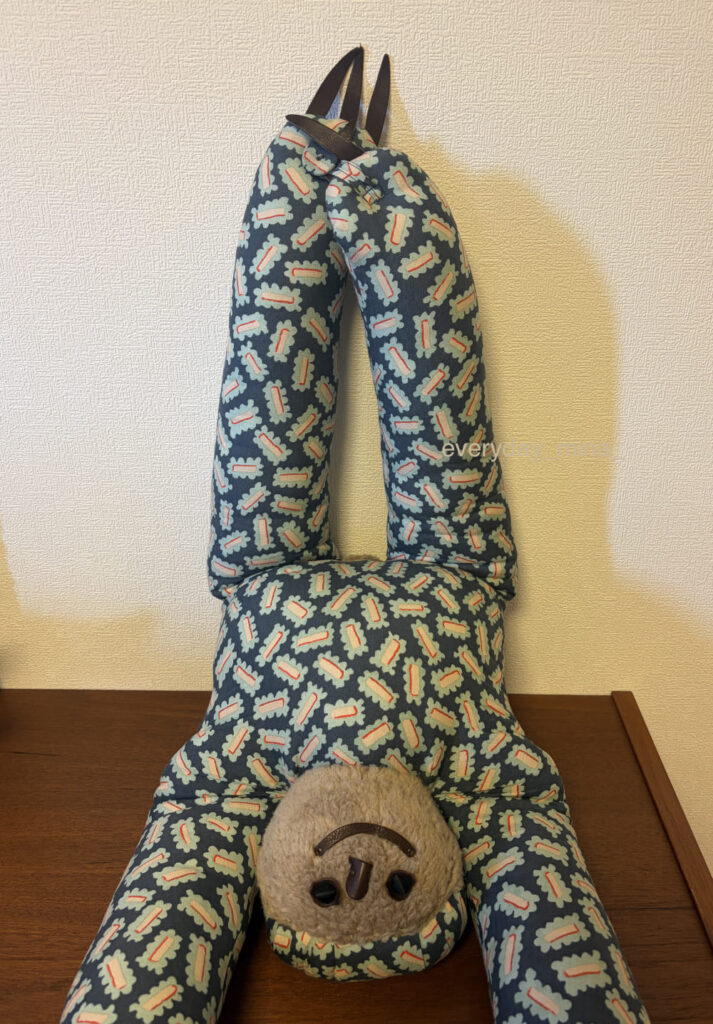
It even seems quite at ease sitting with its hands folded, legs tucked in.
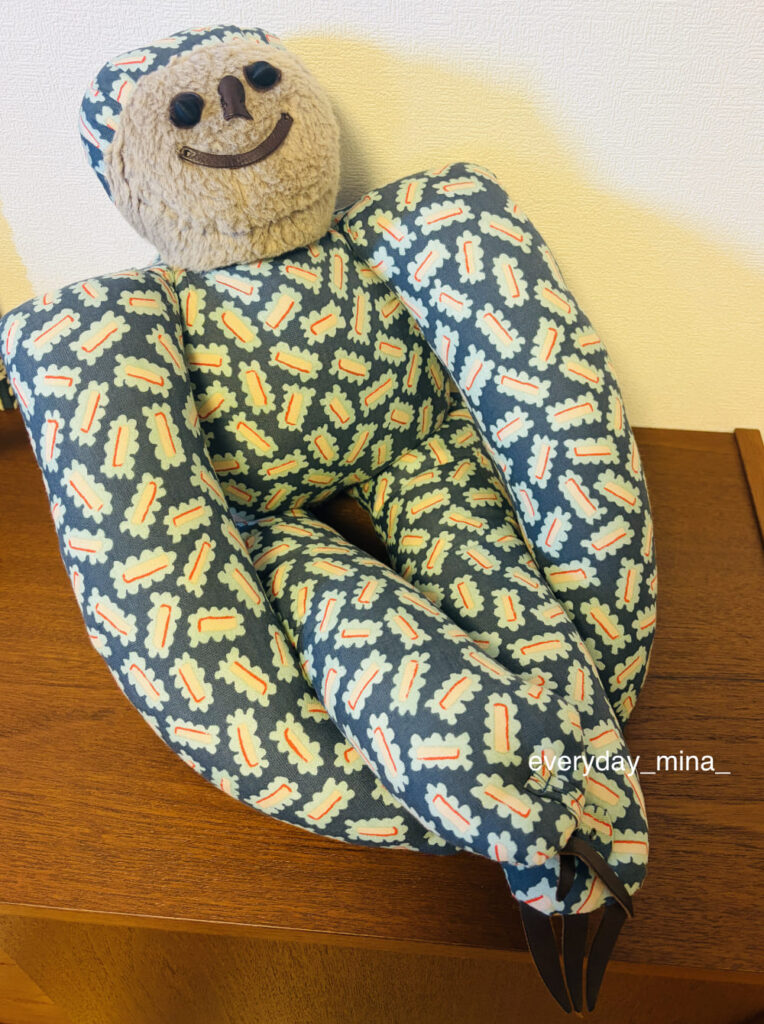
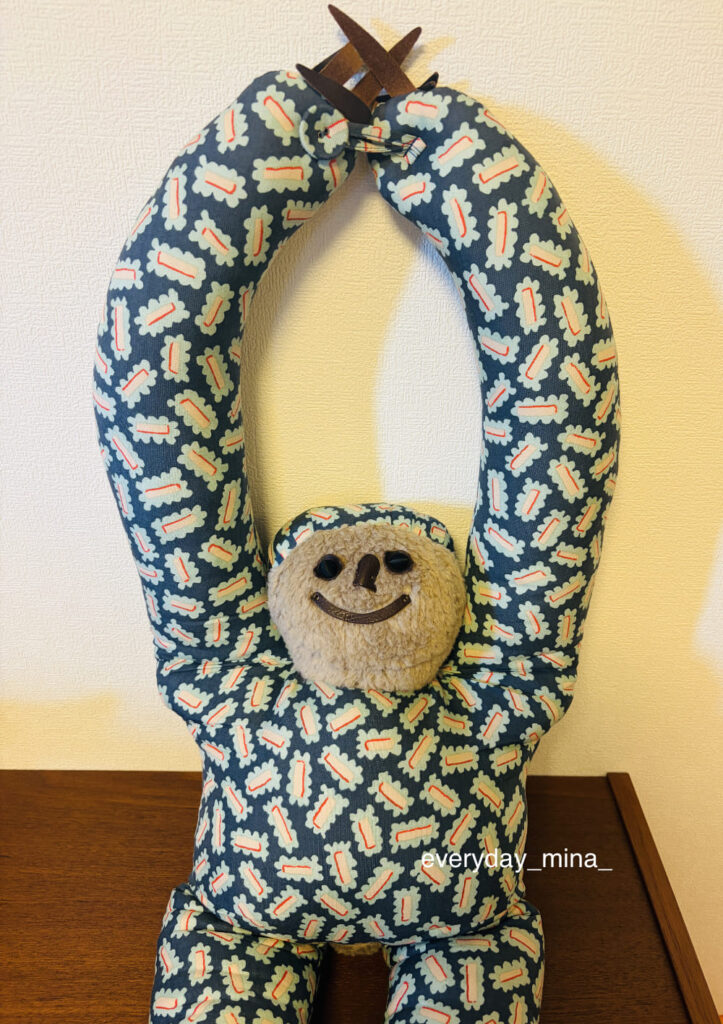
Another one of onomekaman’s most distinctive charms lies in its “free-moving limbs.”
With thoughtfully designed arms and legs that can be gently posed,
it feels almost a waste to simply sit it on a sofa.
You can hang it from a curtain rail or the back of a chair,
or let it hold onto a favorite cushion or another soft toy…
Some fans even enjoy displaying it upside down, inspired by the origin of its name (which always makes me smile).
Depending on how you choose to place it,
it reveals a different expression each day.
“Where might it be today?”
It brings a quiet sense of playfulness to your space,
like a gentle game of hide-and-seek unfolding in the room—
truly, a kind of “living interior.”

For some reason, it wears a quietly satisfied expression.
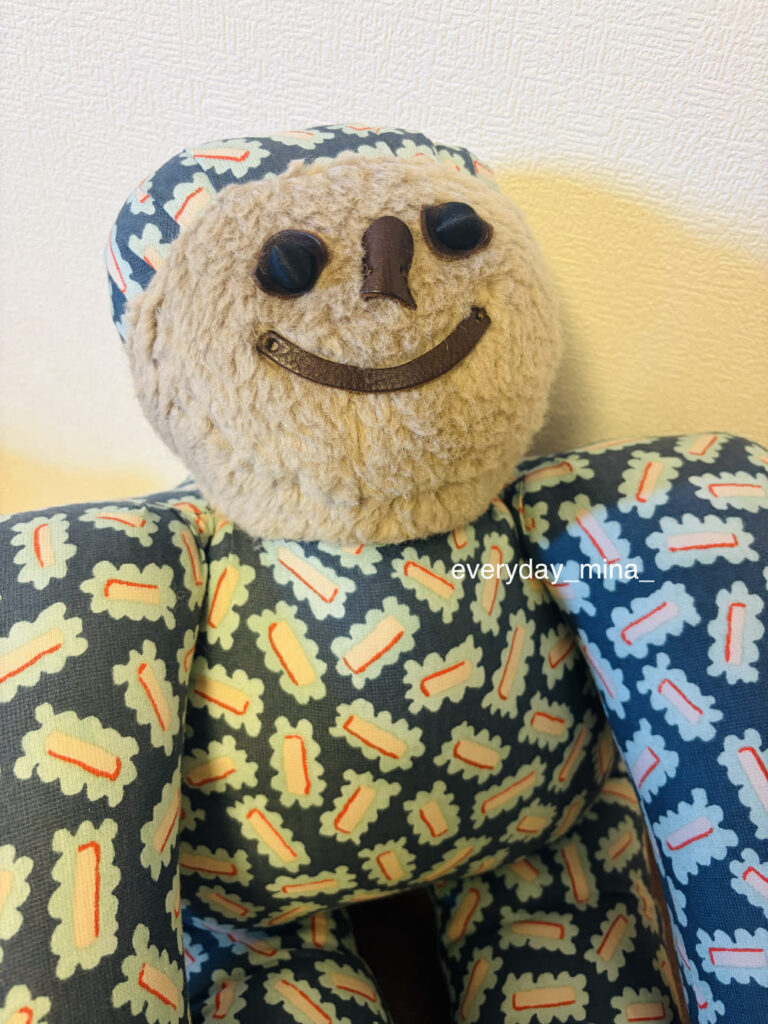
「It's all right!」
【konomekaman】
A smaller, endearing version of the long-limbed character.
Slightly smaller than the onomekaman, the “konomekaman” is marked by its softer expression.
Crafted using a variety of textiles, its gentle charm is part of what makes it so endearing.
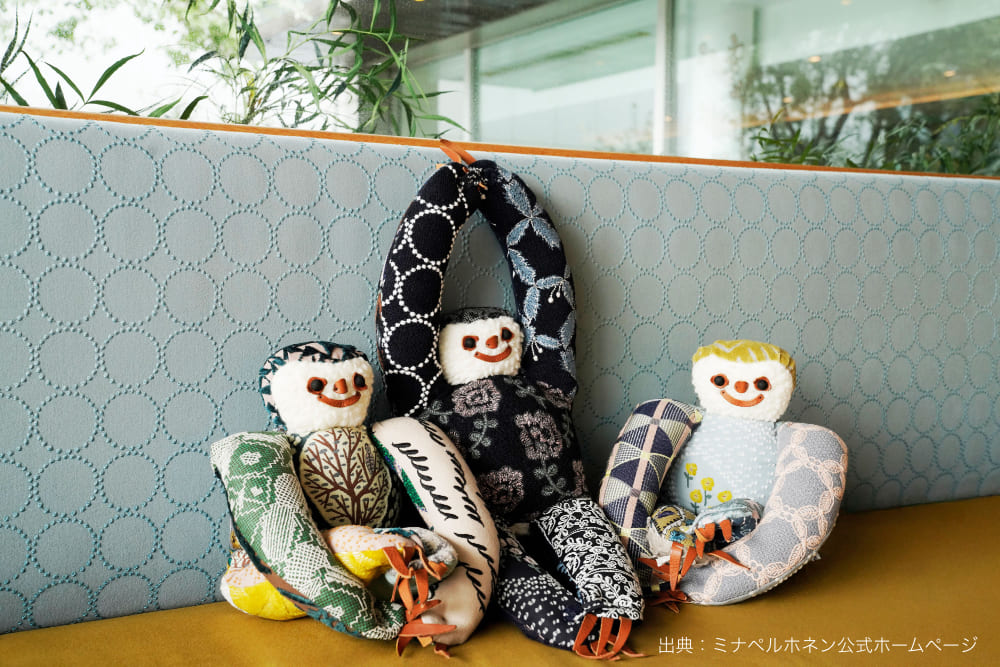
Size (konomekaman)
(Sizes may vary slightly; the following are approximate averages.)
Length: approx. 68 cm
Width: approx. 22 cm
Seated height: approx. 25 cm
📏 Onomekaman vs. Konomekaman: Ratio Comparison
Here are the results of comparing their proportions, using seated height as a reference value of 1.
| Item | Onomekaman Seated Height (approx. 34cm) | Konomekaman Seated Height (approx. 25cm) | Key Differences |
| Overall Length (with limbs extended) | 2.73 | 2.72 | Onomekaman (Large) |
| Width | 0.94 | 0.88 | Onomekaman (Large) |
After comparing them side by side in a table,
I found a few unexpected details.
The larger “onomekaman,” compared to the smaller “konomekaman,”
actually has slightly higher proportions in both limb length and body width relative to its height.
As the size increases, that distinctive sense of elongated movement—and the comforting fullness when held—seems to become even more pronounced.
In contrast, the “konomekaman” feels more compact overall,
with its proportions gently kept in balance.
The larger one feels more dynamic,
while the smaller one feels especially endearing.
It’s not simply a matter of size—
perhaps each has been shaped to find its own most charming balance.
【quzyla cushion】
A magnificent whale-shaped cushion crafted with extraordinary detail.
And finally, the one I personally feel most drawn to—
the piece I would most love to share with you—is this “whale cushion.”
When I first heard the name, I found myself wondering,
“A whale… as a cushion? What could that possibly be like?”
My mind was filled with quiet question marks (and a small smile).
I imagined something soft and rounded, perhaps a gently stylized, character-like design.
But when I finally saw it in person…
No, no—this is a whale.
Not simply something cute,
but a form that feels intent on capturing the presence of a whale itself.
And somehow, it was that sense of quiet realism that struck me the most.
Compared to the other animal cushions,
this whale cushion stands out for its especially meticulous craftsmanship.

Delicate embroidery that captures the moment of the whale’s spout,
and the complex curves that shape its large, flowing body…

In every detail, you can feel the unmistakable dedication of minä perhonen—
quite literally, woven into each and every part.

It is not simply “a cushion shaped like a whale,”
but something approached as a three-dimensional piece.

You can feel the genuine dedication of Akira Minagawa and the artisans the moment you hold it in your hands.
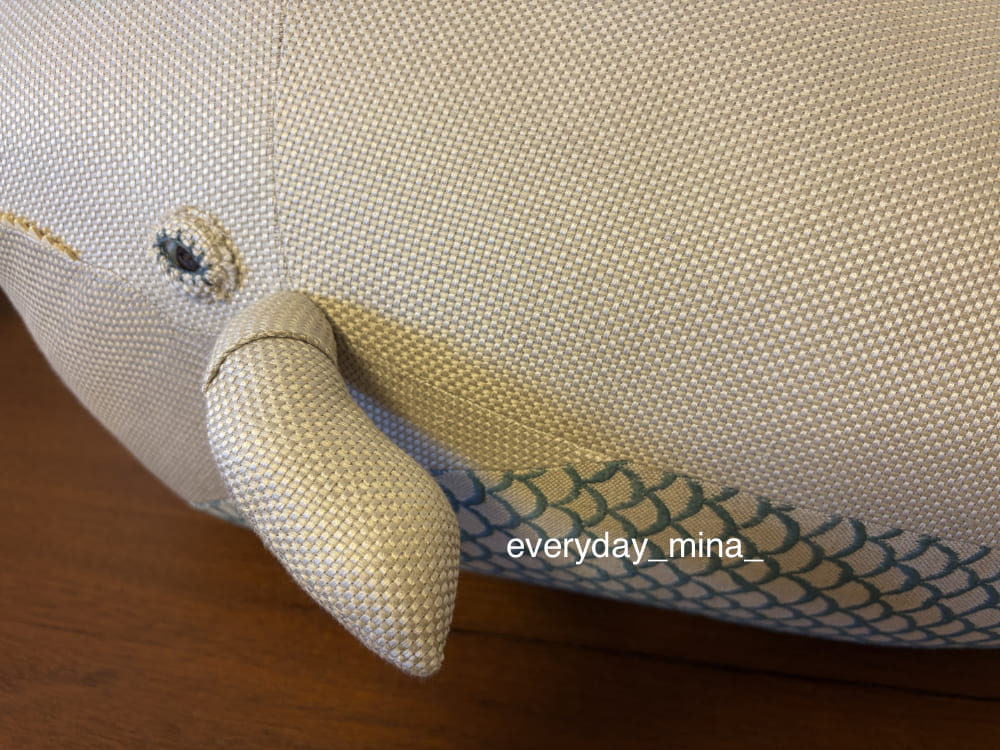
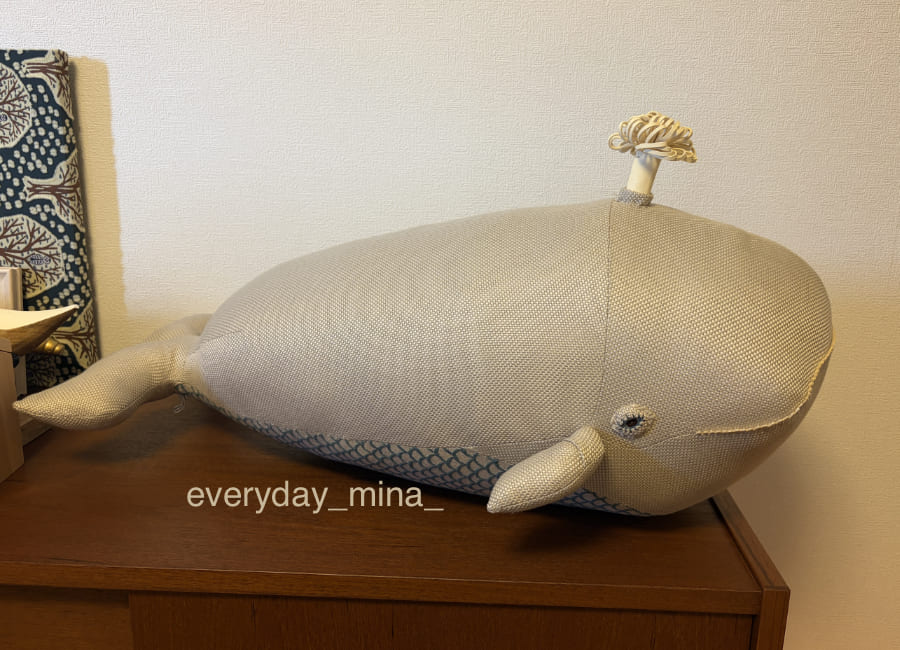
Its full length truly feels impressive.
A full 70 cm…
(yes, it even extends beyond the shelf—something that still makes me smile.)
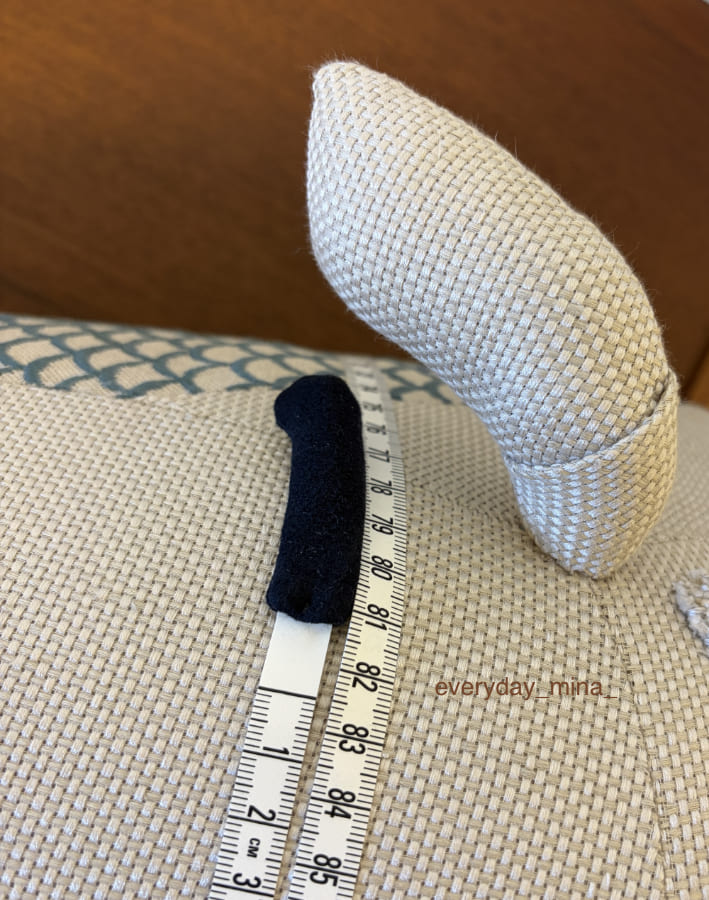
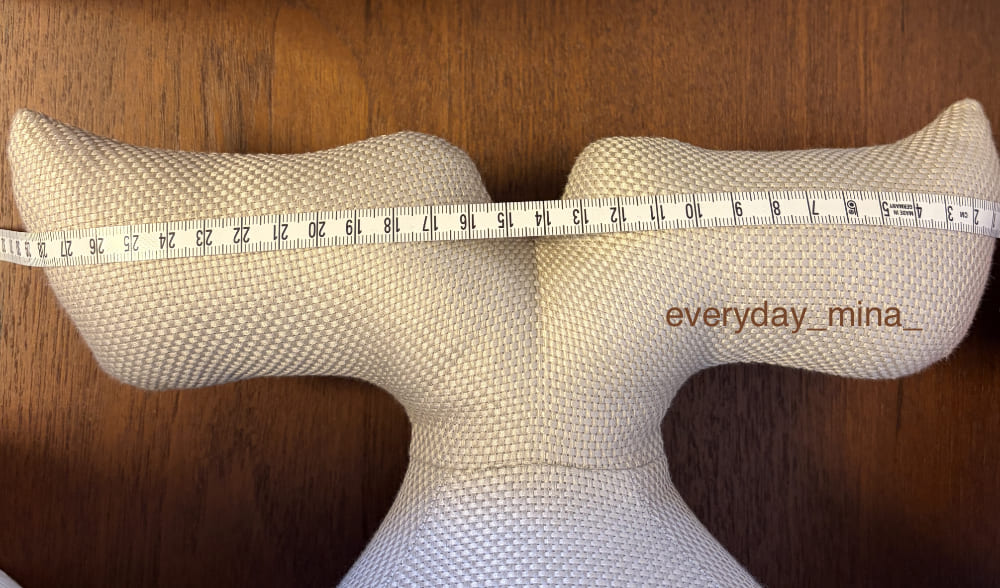
At its widest point, the body measures approximately 82.5cm.
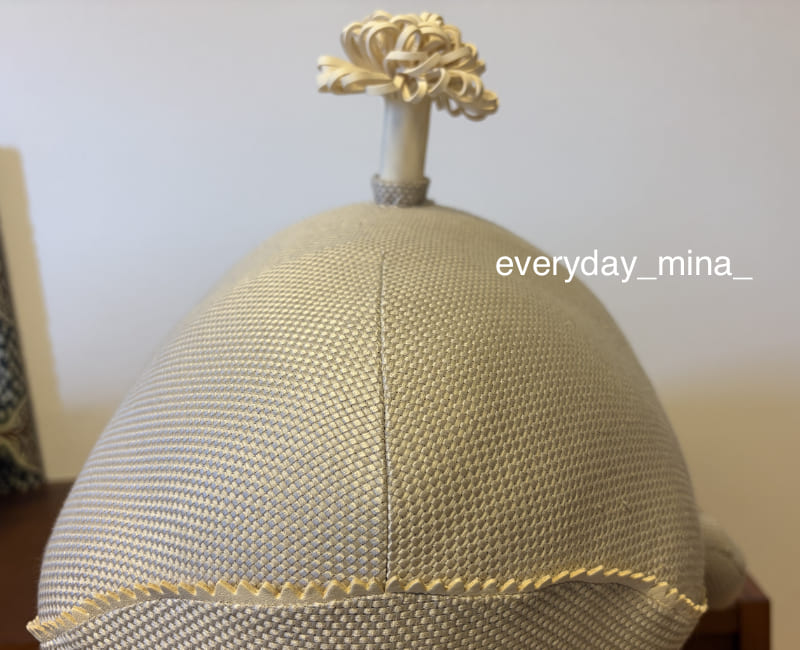
What feels especially striking is the way the whale’s spout is expressed,
bursting upward with a sense of movement from the top of its head.
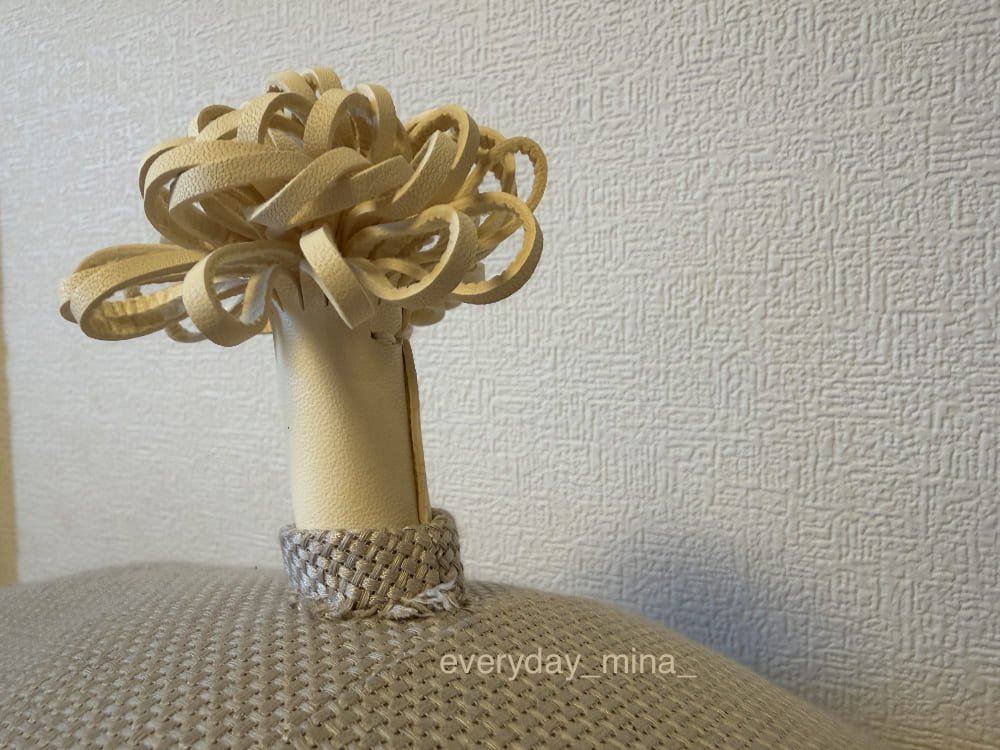
The spout, in fact, is crafted from a single piece of leather,
carefully incised and then gently curled to form its three-dimensional shape.

It’s the kind of detail that feels almost impossible to fully convey in words—
when you see it in person, you can’t help but look twice and wonder, “How is this even made?”
Such a thoughtfully considered piece of craftsmanship leaves you quietly in awe.

Within the softness of the cushion, filled generously with padding,
the crisp texture of leather appears as a subtle accent—
as if, in that moment, a sense of life is gently breathed into the whale.
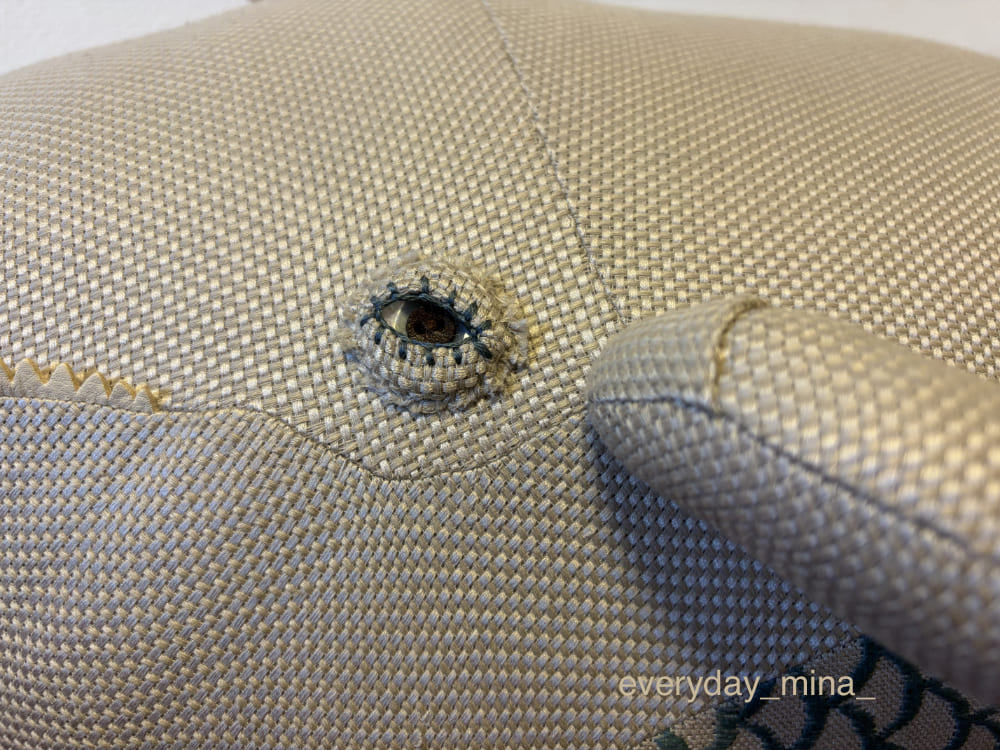
At first, I didn’t even notice, as the eyes are half-covered by the lids—
but on closer look, they are actually made from small buttons.

Set against the body, their modest size gives them a surprisingly lifelike, almost real presence.
Our home is a little on the compact side,
so I sometimes feel a bit sorry for this large whale… (which still makes me smile).

And yet, whether in a spacious living room, on a large shelf, or even by the entrance,
its presence instantly brings a sense of focus to the space.

There is an undeniable, almost commanding presence to this whale cushion—
one that quietly takes center stage.
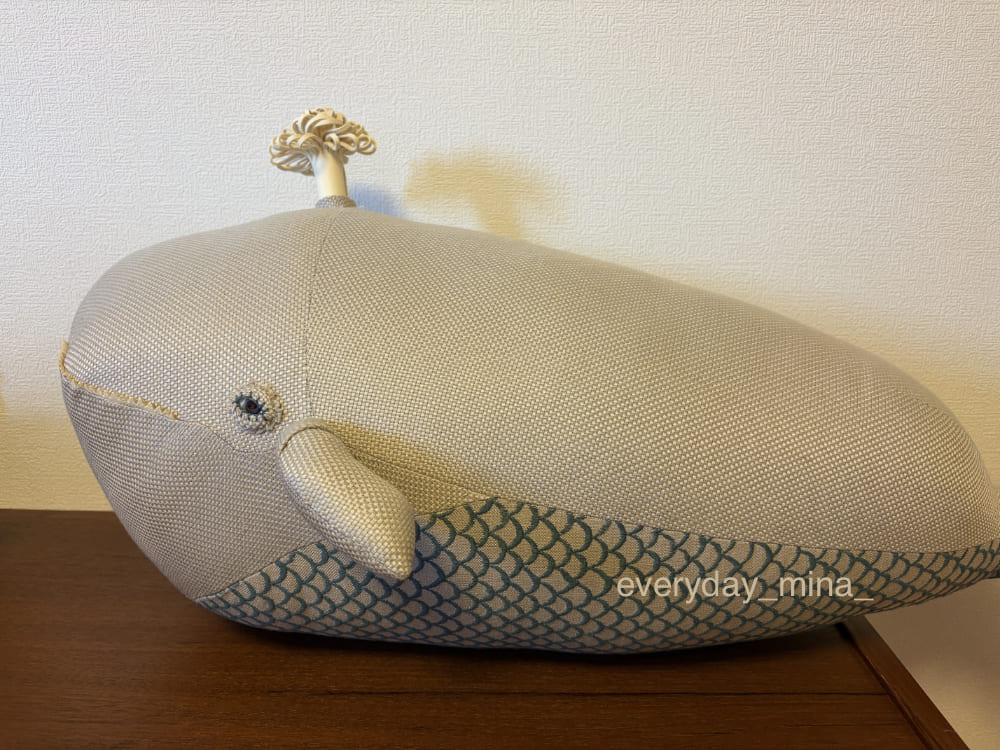
As its name suggests, the “whale” is rendered in colors such as grey, blue, and navy,
reflecting a quiet commitment to realism.
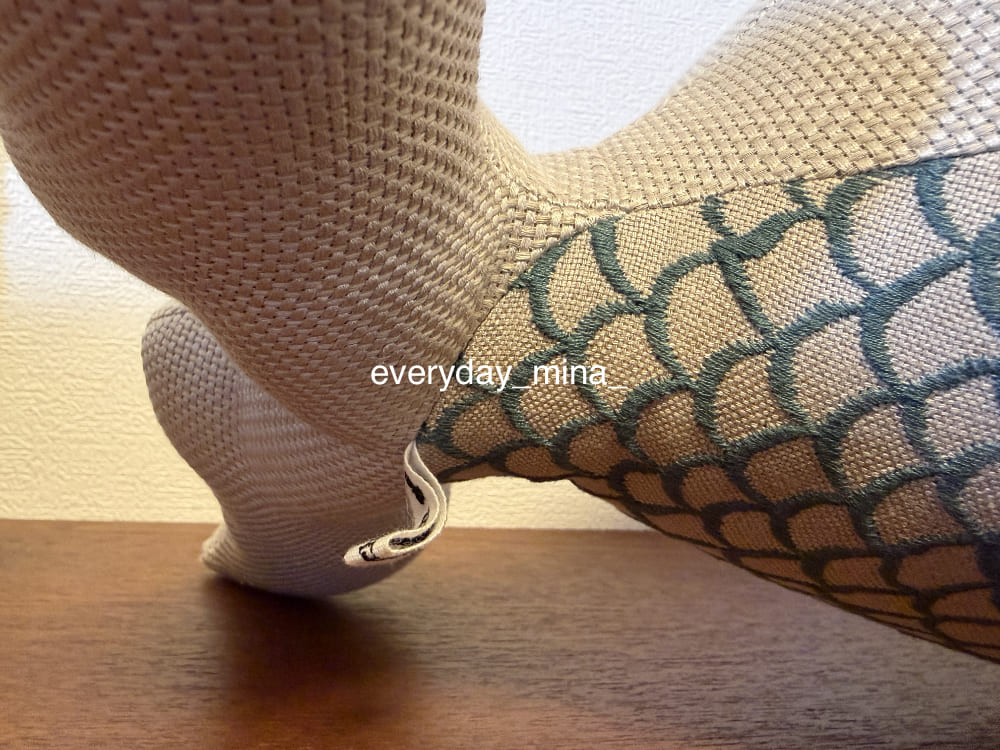
Looking closely at the underside,
you’ll find it composed in a different textile from the main body.
Here, the mermaid textile is used.
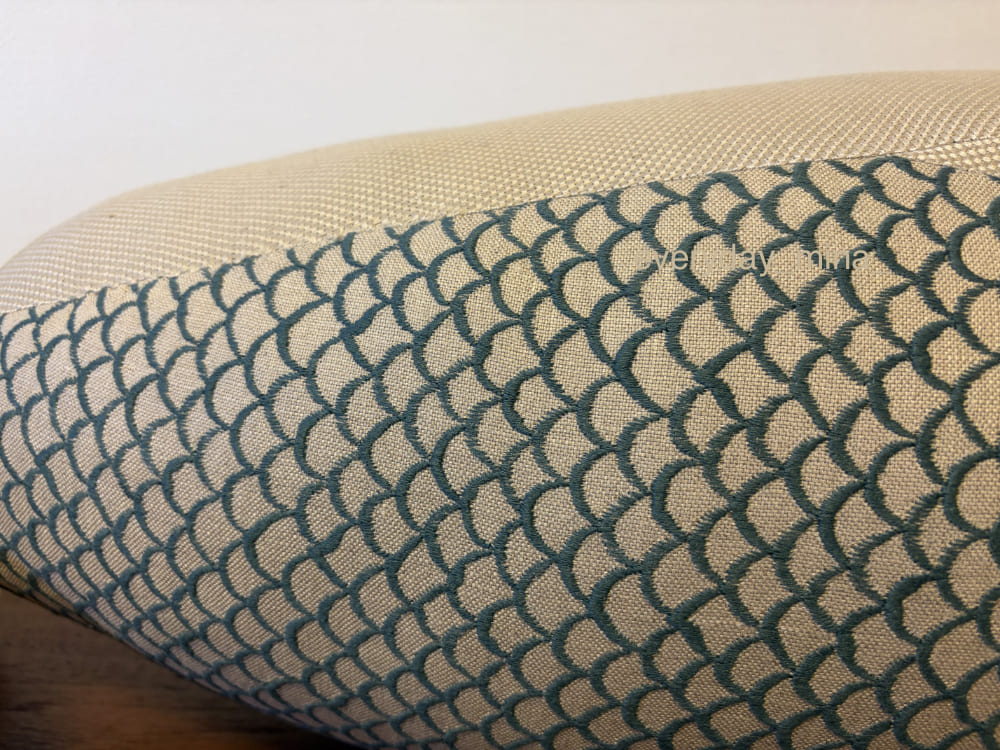
The main fabric appears to be a linen-based textile with a loosely woven, textured feel.

The mermaid textile, too, is finished with the same sense of care and quiet presence.
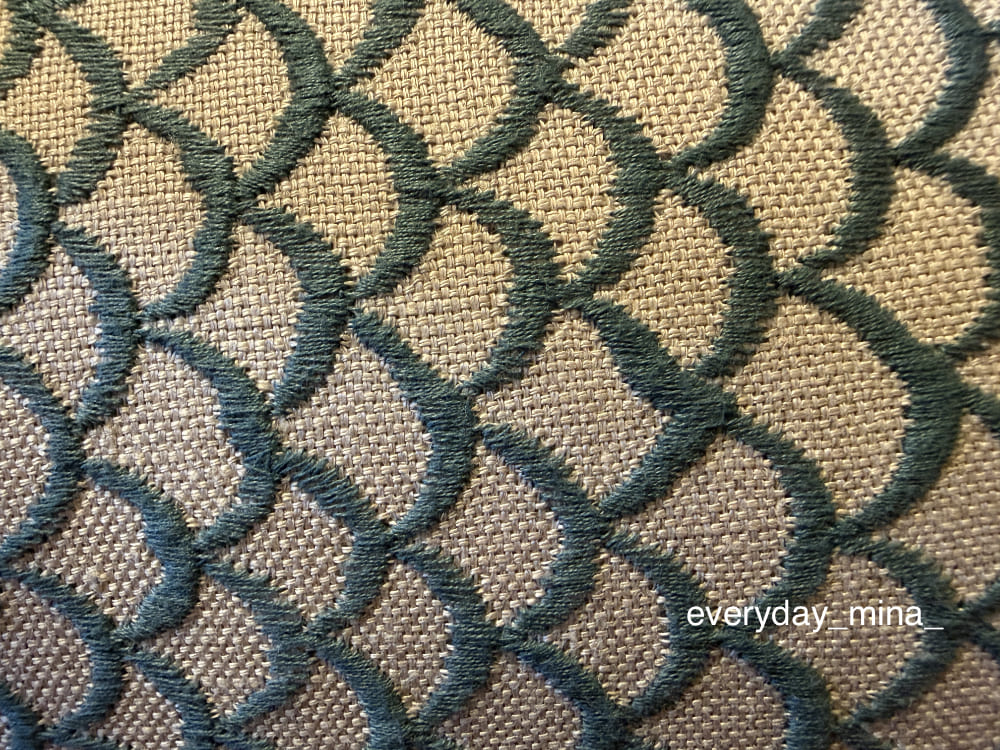
Detailed fins and tail, perfectly shaped and beautiful.
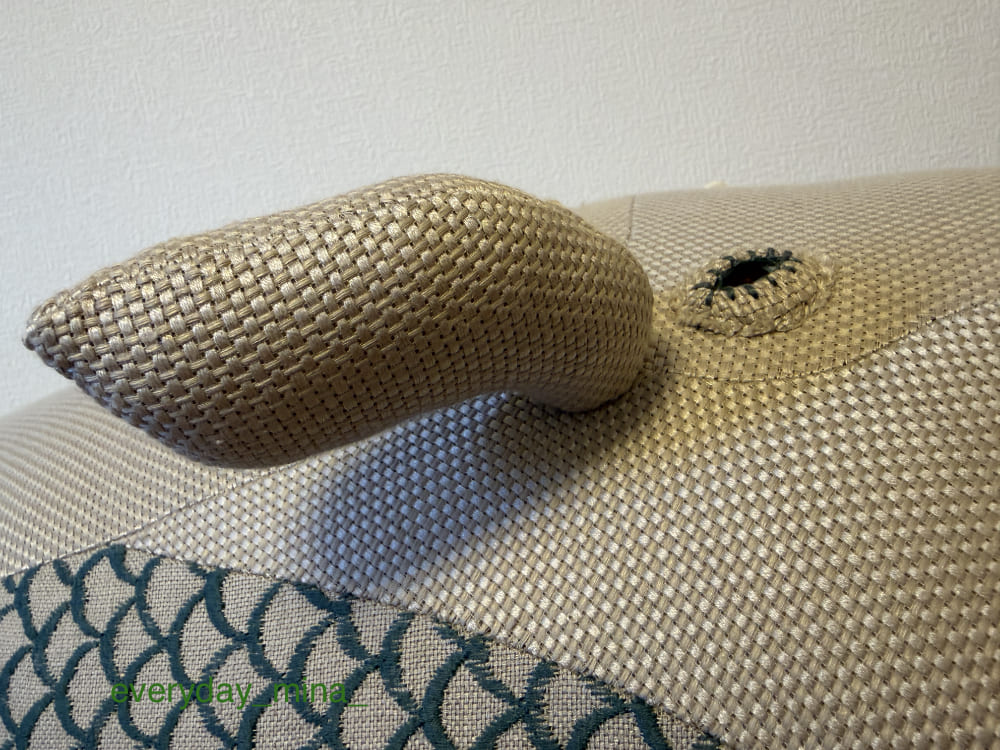
From every angle, the design feels complete—without a single detail overlooked.
The width of the tail fin measures approximately 29 cm.
Rather than “cute” or simply endearing,
it carries a sense of quiet sharpness—
a refined strength, with a presence that feels almost dignified.
Wherever it is placed,
it has the power to transform the space into something unmistakably “minä.”
A truly earnest whale, with a kind of presence that feels almost like magic.
🖋 Tips for Welcoming It into Your Everyday Life
The animal cushions introduced here—aside from the kousagi—are all relatively large, with a sense of generous volume.
Of course, it’s important to consider how they balance within your space,
but it’s just as meaningful to gently imagine where they will rest when not in use.
If you have a little room to spare,
it can be lovely to collect pieces not only by your favorite textiles,
but also by season—choosing lighter fabrics for summer, and warmer ones for winter.
By changing them with the shifting seasons,
you may find yourself enjoying a quiet, luxurious rhythm of life—
one where the passage of time is felt through your interior.
As a small aside,
I’m planning to introduce a collection of “little plush companions” next.
I hope you’ll look forward to the next update.
ABOUT ME

「コーディネートが苦手!でもミナペルホネンが大好き!」と、
ひょんなことから悩みと熱意を聞いてもらい、 ファッションが大好きな仲間と一緒にミナペルホネンのお洋服やグッズ、その魅力をお伝えするサイトを作ることになりました。
撮影にこだわり、ミナが好きな方、ファッションやアートが好きな方にも、ワクワクしていただけるような情報をお届けします。
ひょんなことから悩みと熱意を聞いてもらい、 ファッションが大好きな仲間と一緒にミナペルホネンのお洋服やグッズ、その魅力をお伝えするサイトを作ることになりました。
撮影にこだわり、ミナが好きな方、ファッションやアートが好きな方にも、ワクワクしていただけるような情報をお届けします。